Stucco Wikipedia-Style Guide: Houses, Systems & Repairs
Written by Stucco Champions - Southern California's Authority on Exterior Plastering.
Stucco for houses is an exterior wall finish made from cement plaster, sand, water, reinforcement, weather barrier layers, and a final texture or color coat. On Southern California homes, stucco is popular because it is durable, fire resistant, design-flexible, and well suited to Spanish, Mediterranean, modern, and coastal architecture.
But stucco is not just decorative material spread over a house. A proper stucco exterior is a layered wall system. It needs drainage, reinforcement, correct thickness, clean terminations, and the right finish for the home's design and climate exposure.
This guide explains what stucco is, how it works on houses, when it is a good choice, what systems are available, and what homeowners should know before repairing, replacing, or installing stucco.
Stucco Wikipedia-Style Definition
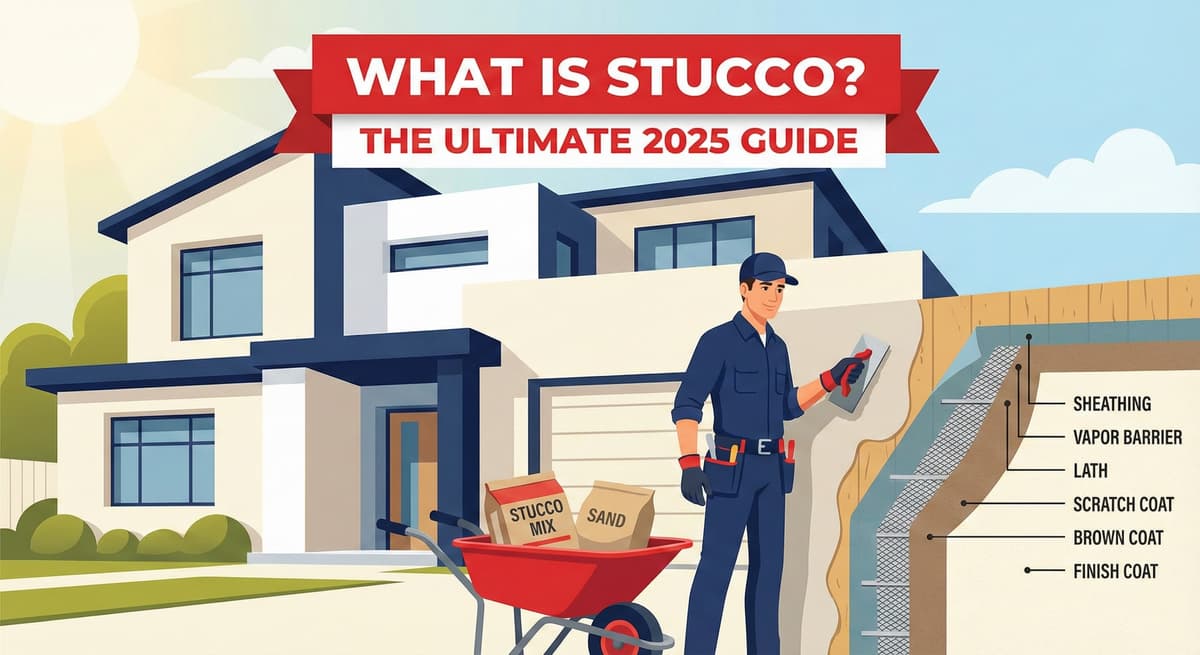
Stucco Wikipedia searches usually come from people who want a plain-English definition before they decide whether stucco is right for a house. Stucco is an exterior cement plaster wall finish. It is made from layers that may include water-resistive barrier, metal lath, scratch coat, brown coat, and a final texture or color coat, depending on the system.
This stucco Wikipedia-style summary is not a replacement for a building inspection, but it gives homeowners the basic vocabulary: the finish is what you see, the base coats provide thickness and shape, the lath reinforces the plaster, and the drainage details help the wall release water instead of trapping it.
If you are trying to understand stucco from scratch, start with three questions: what wall system do you have, what finish is on top, and are there any symptoms of cracking, staining, or moisture? Those answers matter more than the surface texture alone.
Free Assessment
Noticing Stucco Damage?
Get a free on-site assessment from a licensed contractor. $0 deposit, no obligation.
GET FREE ASSESSMENTQuick Answer: Is Stucco Good for Houses?
Stucco is good for houses when it is installed as a complete wall system, not just as a surface coating. It can last for decades, handle heat well, resist fire better than many siding products, and create a clean architectural look. The main risks are poor drainage, cracking from movement, bad flashing, buried weep screed, and repairs that ignore the hidden wall layers.
| Homeowner Question | Practical Answer |
|---|---|
| Best use | Exterior walls on homes that need a durable, low-profile, fire-resistant finish. |
| Main benefit | Long life, strong curb appeal, texture options, and good performance in warm dry climates. |
| Main weakness | Stucco can crack or trap moisture if the wall assembly is poorly detailed. |
| Best homeowner move | Evaluate the wall system before choosing a patch, re-stucco, smooth finish, or new finish coat. |
What Is Stucco on a House?
Stucco is a cement-based exterior plaster system. On a house, it usually includes a weather-resistive barrier behind the plaster, galvanized metal lath or reinforcement, a cement base coat, and a finish coat that provides the visible color and texture.
The finish you see from the street is only the outer layer. Behind that finish is the part that makes the wall perform: drainage paper, lath, scratch coat, brown coat, weep screed, casing beads, flashing transitions, and the substrate. When those layers are correct, stucco can be one of the most durable residential exterior systems available.
When those layers are wrong, the wall can crack, stain, leak, or delaminate even if the surface looks good at first.
Why Stucco Is Common on Southern California Houses
Stucco is common in Southern California because it fits the climate and the architecture. The material handles sun exposure well, creates a continuous exterior skin, and works with the Spanish, Mediterranean, ranch, modern, and coastal styles seen across Orange County and Los Angeles.
Homeowners choose stucco because it can:
- Create a clean, monolithic exterior without lap lines.
- Work with many textures, from sand finish to lace to smooth stucco.
- Resist fire better than many combustible siding materials.
- Provide long service life when the wall drains correctly.
- Support both traditional earth-tone finishes and modern acrylic colors.
- Blend well with clay tile roofs, modern windows, stone, wood accents, and hardscape.
For homeowners comparing finish looks, our guide to the best stucco finish for a home explains how texture choice affects curb appeal, cost, and maintenance.
The Anatomy of a Stucco House Wall
A successful stucco house exterior is built in layers. Each layer has a job, and skipping one can create problems later.
- Weather-resistive barrier: Building paper, housewrap, or a compatible membrane protects the sheathing and directs incidental moisture downward.
- Flashing and weep screed: These details help water leave the wall at the base and around penetrations.
- Metal lath or reinforcement: Galvanized wire mesh gives the plaster a mechanical base to grip.
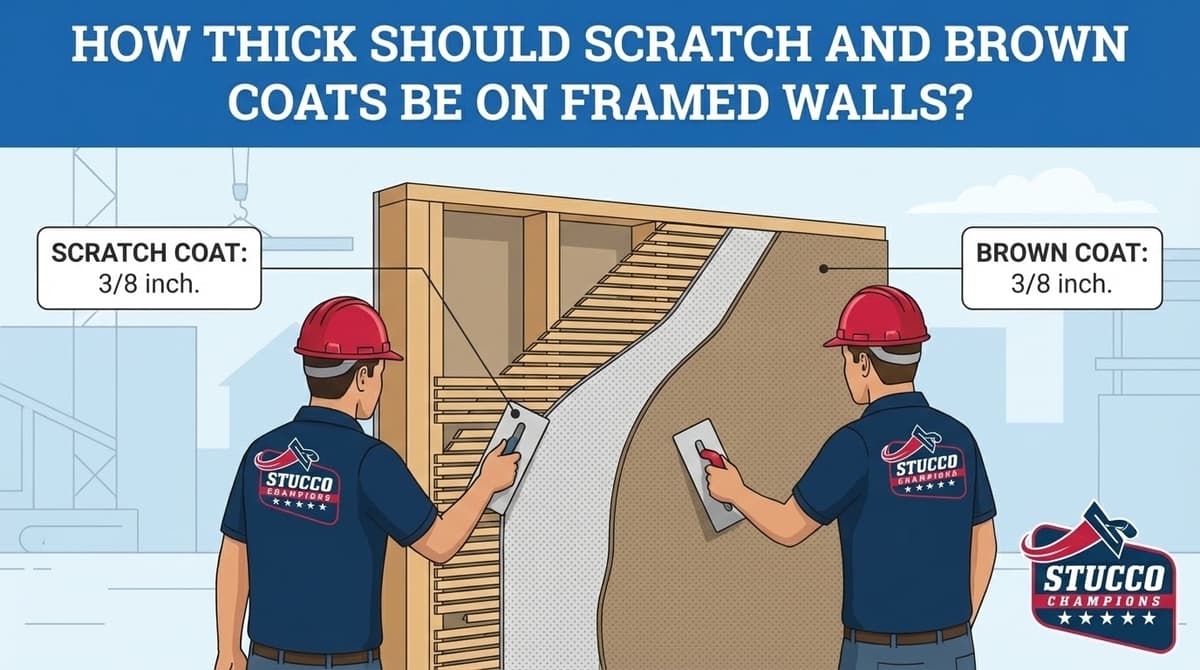
- Scratch coat: The first cement plaster coat locks into the lath.
- Brown coat: The leveling coat creates a flat plane for the finish.
- Finish coat: The visible texture and color layer.
If the lath, paper, or drainage details fail, a surface patch will not fix the wall. That is why many stucco repairs need a system approach instead of just a cosmetic skim coat. For repair-specific guidance, see our stucco repair service page.
3-Coat Stucco vs. One-Coat Stucco for Houses
There are two common stucco systems homeowners hear about: traditional three-coat stucco and one-coat stucco. Both can perform well when installed correctly, but they are not the same assembly.
Traditional 3-Coat Stucco
Three-coat stucco is the classic system. It uses a scratch coat, brown coat, and finish coat over lath and weather barrier. It is thick, impact-resistant, and common on older homes and high-quality exterior renovations.
Typical three-coat stucco is often around 7/8 inch thick over framed walls, depending on assembly and code requirements. It gives the wall mass and durability, but it also needs proper curing and skilled application.
One-Coat Stucco
One-coat stucco is a faster system that typically uses a foam board or insulation component, a modified cement base coat, and a finish coat. Despite the name, it is not literally a single finished layer. It is a different engineered assembly.
One-coat systems can improve installation speed and thermal performance, but they must be installed according to the specific product system. Mixing details from one system into another is where problems begin.
For a deeper side-by-side comparison, review our guide to one-coat vs. three-coat stucco.
Stucco Finish Options for Houses
The finish coat controls the final look of the house. Common stucco finishes include sand finish, lace or skip trowel, dash, cat face, and smooth stucco. Each finish has a different appearance, cost profile, and repair visibility.
For many houses, a sand finish is a practical middle ground because it looks clean while still hiding small wall imperfections. Smooth stucco gives a premium modern look, but it requires better wall preparation and makes future patches easier to see.
If you are choosing between finish styles, compare sand finish stucco vs. smooth stucco. Smooth work can look excellent, but it needs better wall preparation and more realistic expectations about future patch visibility.
Traditional Cement Finish vs. Acrylic Finish
Stucco for houses can use a traditional cement finish or an acrylic finish. Traditional cement finishes are breathable and mineral-based. They often create a natural, slightly mottled look that suits classic homes.
Acrylic finish is a synthetic finish coat that comes pre-mixed in pails. It can hold darker colors more evenly, resist some staining issues, and create consistent fine textures. It is not a substitute for fixing a damaged wall, but it can be a strong finish choice on a sound stucco system.
For the material differences, read our guide on what acrylic stucco is.
Common Stucco Problems on Houses
Stucco problems usually come from movement, moisture, impact, age, or poor detailing. The most common issues include:
- Hairline cracks: Often from normal shrinkage or minor movement.
- Diagonal cracks near openings: Can signal building movement or stress around windows and doors.
- Hollow or delaminated areas: May mean the plaster has separated from the lath or base.
- Rust stains: Often tied to corroding lath, fasteners, or metal accessories.
- Soft or bubbling walls: Can indicate trapped moisture or substrate damage.
- Buried weep screed: Hardscape or soil installed too high can block drainage at the bottom of the wall.
If your house has cracking, do not assume every crack needs the same repair. Some cracks are cosmetic, while others point to movement, moisture, or deeper wall-system issues.
Maintenance Tips for Stucco Houses
Stucco is often described as low maintenance, but low maintenance does not mean no maintenance. A stucco house should be inspected periodically for cracks, staining, failed sealant, blocked drainage, and moisture signs near windows, decks, planters, and the base of walls.
Basic maintenance includes:
- Keep soil, mulch, and hardscape below the stucco termination so the wall can drain.
- Seal small cracks before water has a path into the wall.
- Use soft washing methods instead of aggressive pressure washing.
- Watch for rust stains, bubbling paint, or recurring cracks in the same spot.
- Repair failed caulking around windows, doors, and penetrations.
- Investigate moisture symptoms before repainting or re-coating.
Moisture issues should be handled before cosmetic finish work. If you see staining, softness, bubbling, or repeated cracking, review our stucco water damage repair guidance before choosing a new finish.
Repair, Re-Stucco, or New Stucco?
For existing houses, the right scope depends on how much of the wall system is failing. A small isolated crack may only need sealing. A damaged patch may need localized lath and base coat repair. Widespread cracking, failing lath, or moisture-damaged substrate may require a larger section repair or re-stucco.
Do not choose the finish first. Start with the wall condition. Once the wall is sound, then choose the texture, color, and finish chemistry.
For budget planning, see our stucco repair cost guide. Patch-level repairs should still be evaluated by wall condition, texture, and the condition of the hidden lath and weather barrier.
Is Stucco Right for Your House?
Stucco is a strong choice if you want a durable exterior, a clean architectural look, and a finish that fits Southern California homes. It is especially well suited for houses where the design calls for continuous exterior walls rather than lap siding or panel seams.
It may not be the right choice if the wall has unresolved water intrusion, poor drainage, or structural movement that has not been corrected. Stucco performs best when the hidden details are treated as seriously as the finish coat.
Final Recommendation
Stucco for houses works best when homeowners understand it as a wall system. The visible texture matters, but the weather barrier, lath, base coat, flashing, drainage, and finish chemistry determine whether the exterior lasts.
If you are building, repairing, or upgrading a stucco house, start with the wall condition and the assembly details. Then choose the finish style that fits the home, the climate exposure, and the maintenance expectations.
Need help deciding what your stucco house needs? Contact Stucco Champions for a free consultation and a practical recommendation based on your wall condition and exterior goals.
Frequently Asked Questions About Stucco
How much does stucco repair cost in Orange County and Los Angeles?+
Stucco repair typically ranges from $500 for minor crack patching to $5,000+ for full re-stucco of a single elevation. The exact cost depends on the damage type (hairline cracks, water damage, delamination, weep screed failure), the square footage involved, and whether the original three-coat or one-coat stucco system needs to be matched. Stucco Champions provides fixed-price written estimates after a free on-site assessment — no hourly billing, no surprise change orders. See our stucco repair cost guide for detailed pricing by repair type.
How long does stucco last in Southern California?+
Properly installed three-coat stucco lasts 50-80+ years in Southern California's climate. The most common failure points aren't the stucco itself — they're the supporting components: corroded weep screed, deteriorated building paper behind the stucco, and improperly sealed window flashing. Most "stucco failures" are actually moisture-intrusion failures that start at one of these points. Annual visual inspection catches problems before they spread, which is why we offer free weep screed assessments for homeowners in our service area.
Can I repair stucco myself, or do I need a contractor?+
Hairline cracks under 1/8 inch wide can be sealed with elastomeric caulk by a homeowner. Anything larger — pattern cracks, delamination (where stucco pulls away from the wall), water-damaged areas, or chimney/window leak repairs — requires a licensed contractor. Improper DIY repair on these is the #1 cause of repeat failures because the underlying cause (usually moisture) isn't addressed. California's CSLB requires a license for any stucco work over $500. Looking for a highly-rated stucco contractor in Southern California? We are a CSLB-licensed and insured team ready to help.
How do I know if I need stucco repair vs. full re-stucco?+
If less than 30% of an elevation has visible damage, repair is the right call. If you see large areas of cracking, multiple zones of delamination, or the underlying paper and lath have rotted across an entire wall, full re-stucco of that elevation is more cost-effective long-term. Our free assessment includes a moisture survey and lath inspection so you get a defensible recommendation either way — not just a quote pushing whichever option costs more.
Do you offer warranties on stucco work?+
Yes. Stucco Champions provides a written 5-year workmanship warranty on all stucco repairs and a 10-year warranty on full re-stucco. We're a CSLB-licensed and insured contractor (license #1122006 — verifiable at cslb.ca.gov), which means our work is backed by California's contractor licensing board, not just our own promise. Request a free estimate to see the warranty terms in writing before you sign anything.
How long does a stucco repair take?+
Most patch repairs are completed in 1-2 days, including a 24-hour cure time before texture matching and color application. Full re-stucco of a single elevation runs 5-7 working days because each coat (scratch, brown, finish) needs to cure properly before the next is applied. We schedule around weather — California stucco needs daytime temperatures above 50°F with no rain forecast for at least 24 hours after each coat. Our crew shows up on time, every time.