Skip to content

Sand or Smooth Finishes? 5 Key Stucco Differences Explained
By Stucco Champions··7 min read
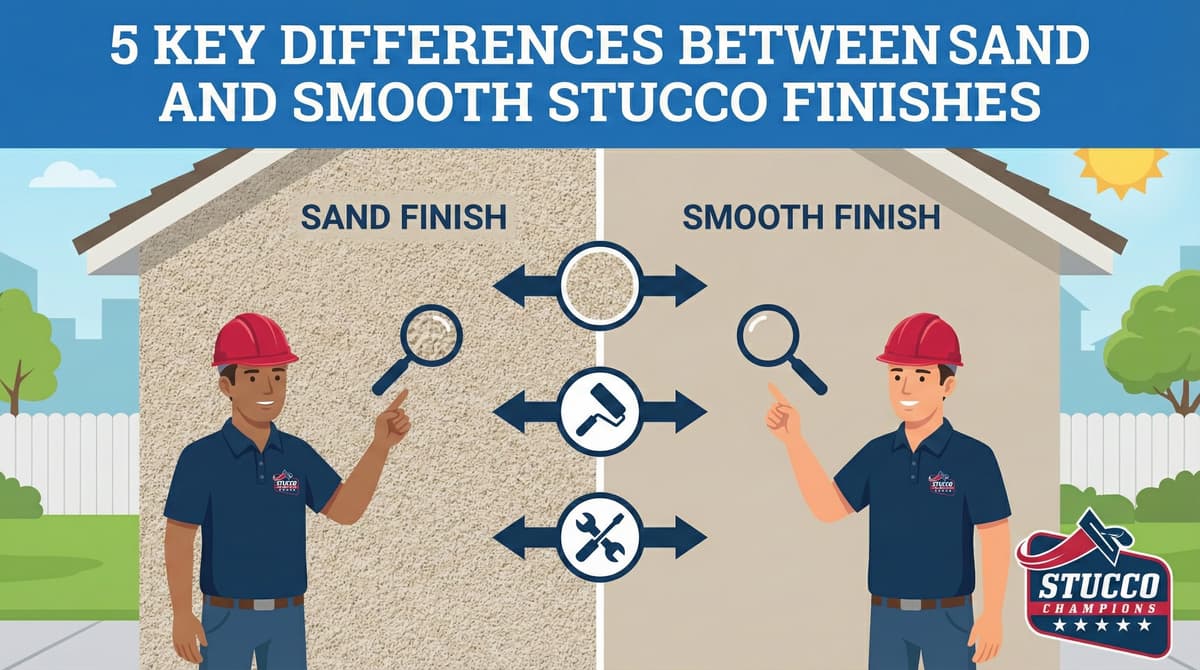
A professional technical infographic from Stucco Champions titled "5 Key Differences Between Sand and Smooth Stucco Finishes," featuring a side-by-side comparison of a textured sand finish and a sleek smooth finish on a residential exterior, with two contractors pointing to icons for texture, application, and maintenance.

Stucco Finishes Compared: Sand vs. Smooth — What’s Right for Your Home?

When it comes to re-stuccoing your home, choosing the right stucco finish is one of the most important decisions you’ll make. Among the most popular stucco finishes are the sand finish and the smooth finish, each offering unique benefits in terms of appearance, durability, maintenance, and cost. At Stucco Champions, we’ve worked on hundreds of homes across Southern California and know how critical it is to match the right finish to your home’s needs and style.

This article will walk you through a detailed comparison of sand and smooth stucco finishes to help you make an informed decision that enhances your home's beauty and performance.

Stucco Finishes


1. Aesthetic Impact

Finish Type Appearance Description
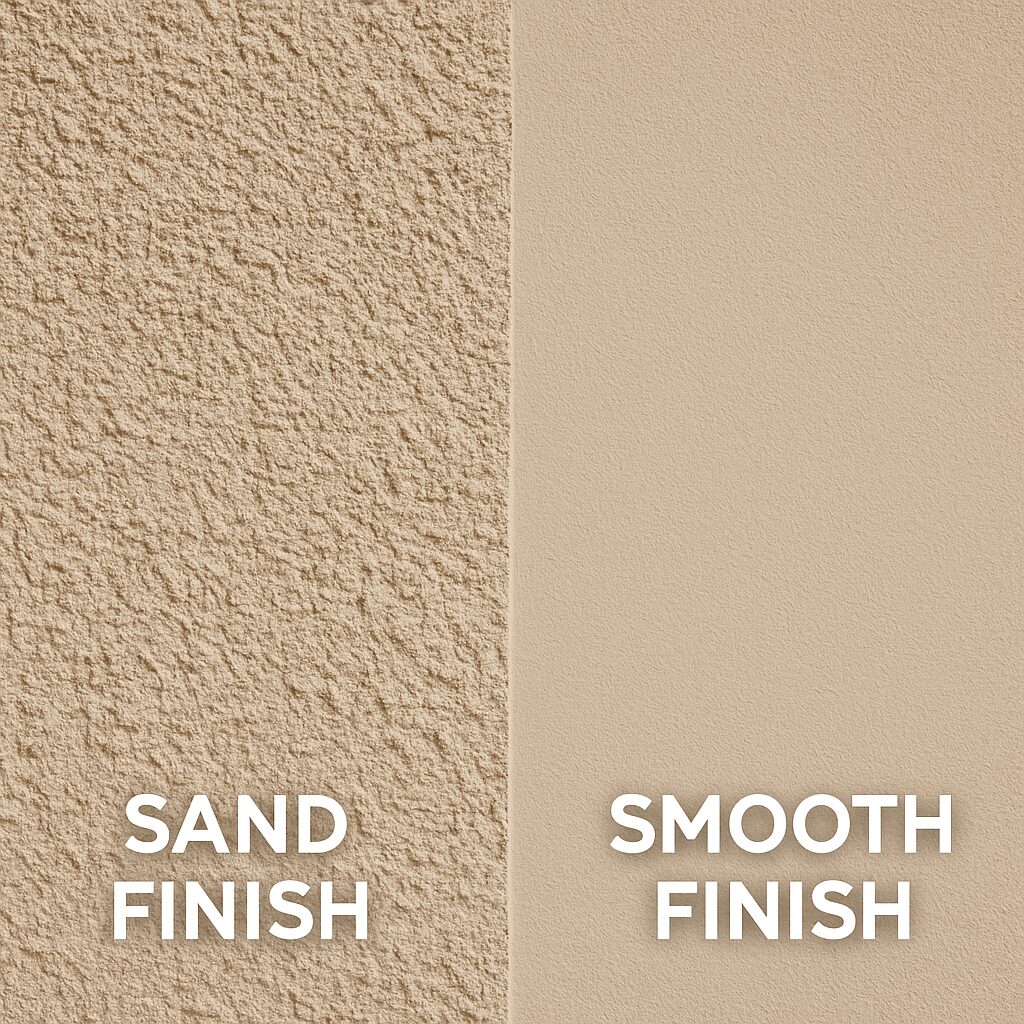
Sand Finish Traditional, slightly textured, matte look; hides imperfections well
Smooth Finish Sleek, modern, clean surface; highlights architecture but shows flaws more easily

The visual impact of your exterior stucco finish plays a huge role in the overall appeal of your home.

  • Sand finishes are often chosen for their timeless look. The texture helps mask surface imperfections and creates a warm, inviting appearance. This finish blends well in traditional and Mediterranean-style homes and neighborhoods.

  • Smooth finishes are sleek, bold, and contemporary. While they offer a high-end appearance, they tend to show even minor imperfections. That’s why they require expert application and a perfectly prepped surface.

The right stucco finish can enhance your home’s architectural features and create a lasting impression from the curb.


Free Assessment

Noticing Stucco Damage?

Get a free on-site assessment from a licensed contractor. $0 deposit, no obligation.

GET FREE ASSESSMENT

2. Price Difference

Finish Type Approximate Price Per Sq. Ft. Notes
Sand Finish $15–$17 More affordable and quicker to apply
Smooth Finish $18–$22 Labor-intensive and requires more skill

Smooth stucco finishes are typically more expensive due to the extra time and precision needed for proper application. The surface needs to be floated multiple times to achieve the clean, polished look smooth stucco is known for.

On the other hand, sand finishes are more budget-friendly and efficient to install, making them a practical choice for homeowners who want value without compromising quality.


3. Maintenance Requirements

Finish Type Maintenance Level Notes
Sand Finish Low Textured surface hides dirt and small cracks
Smooth Finish Medium to High Shows stains, hairline cracks, and discoloration over time

When it comes to upkeep, sand stucco finishes are the winner. Their slightly gritty surface conceals dust, stains, and hairline cracks. Occasional power washing and repainting can keep them looking fresh for years.

Smooth stucco finishes, while beautiful, require more attention. The pristine surface can show even the tiniest cracks or water stains, especially in sunny or coastal environments. This means you’ll need to inspect and maintain the finish more regularly to preserve that polished look.

If low-maintenance is a priority, a sand finish stucco exterior may be your ideal choice.


4. Durability and Performance

When installed correctly, both sand and smooth stucco finishes can last for decades. However, their performance differs slightly:

  • Sand finishes tend to be more forgiving over time. Their texture hides minor substrate movement or aging.

  • Smooth finishes are more vulnerable to cracking if the foundation shifts or if there are structural inconsistencies.

Regardless of which finish you choose, regular repainting and sealing every 5 to 7 years can help extend the lifespan and keep the stucco looking its best.

According to James Hardie’s recommendations, your choice in stucco finish can influence not just how your home looks but how well it holds up over time, especially in warm, dry climates like Southern California.


5. Style Compatibility

Your home’s architecture should guide your finish selection. Here's a quick reference chart:

Home Style Recommended Stucco Finish
Spanish / Mediterranean Sand or Smooth
Mid-Century Modern Smooth
Craftsman / Traditional Sand
Contemporary Smooth
Ranch Style Sand

Some homeowners also mix finishes for accent walls or architectural features. This is a great option if you want to balance aesthetics with function.

Still unsure? Stucco Champions offers on-site consultations to help you visualize both finishes and choose what best fits your home’s personality.


Which Stucco Finish Is Right for You?

Choose Sand Finish if you:

  • Want a classic look that hides flaws

  • Prefer minimal maintenance

  • Are working within a tighter budget

  • Value long-term durability over sleek aesthetics

Choose Smooth Finish if you:

  • Love a clean, modern, upscale appearance

  • Are okay with ongoing maintenance

  • Have a stable structure and don’t mind a higher upfront cost

  • Want to highlight architectural details

No matter which stucco finish you go with, it’s essential to have the work done by professionals who understand the nuances of each style. At Stucco Champions, we have years of experience helping homeowners throughout Southern California get the right look and performance for their investment.


Ready to Simplify Your Stucco Work?
Contact Stucco Champions today for a free consultation!
Visit us at Stucco Champions for helpful resources and to learn more about our services.

The canvas tool is currently unavailable, so I can’t directly apply the changes there — but here's the finalized article you can copy and paste into your site:


Stucco Finishes Compared: Sand vs. Smooth — What’s Right for Your Home?

When it comes to re-stuccoing your home, choosing the right stucco finish is one of the most important decisions you’ll make. Among the most popular stucco finishes are the sand finish and the smooth finish, each offering unique benefits in terms of appearance, durability, maintenance, and cost. At Stucco Champions, we’ve worked on hundreds of homes across Southern California and know how critical it is to match the right finish to your home’s needs and style.

This article will walk you through a detailed comparison of sand and smooth stucco finishes to help you make an informed decision that enhances your home's beauty and performance.


1. Aesthetic Impact

Finish Type Appearance Description
Sand Finish Traditional, slightly textured, matte look; hides imperfections well
Smooth Finish Sleek, modern, clean surface; highlights architecture but shows flaws more easily

The visual impact of your exterior stucco finish plays a huge role in the overall appeal of your home.

  • Sand finishes are often chosen for their timeless look. The texture helps mask surface imperfections and creates a warm, inviting appearance. This finish blends well in traditional and Mediterranean-style homes and neighborhoods.

  • Smooth finishes are sleek, bold, and contemporary. While they offer a high-end appearance, they tend to show even minor imperfections. That’s why they require expert application and a perfectly prepped surface.


2. Price Difference

Finish Type Approximate Price Per Sq. Ft. Notes
Sand Finish $15–$17 More affordable and quicker to apply
Smooth Finish $18–$22 Labor-intensive and requires more skill

Smooth stucco finishes are typically more expensive due to the extra time and precision needed for proper application. The surface needs to be floated multiple times to achieve the clean, polished look smooth stucco is known for.

On the other hand, sand finishes are more budget-friendly and efficient to install, making them a practical choice for homeowners who want value without compromising quality.


3. Maintenance Requirements

Finish Type Maintenance Level Notes
Sand Finish Low Textured surface hides dirt and small cracks
Smooth Finish Medium to High Shows stains, hairline cracks, and discoloration over time

When it comes to upkeep, sand stucco finishes are the winner. Their slightly gritty surface conceals dust, stains, and hairline cracks. Occasional power washing and repainting can keep them looking fresh for years.

Smooth stucco finishes, while beautiful, require more attention. The pristine surface can show even the tiniest cracks or water stains, especially in sunny or coastal environments. This means you’ll need to inspect and maintain the finish more regularly to preserve that polished look.


4. Durability and Performance

When installed correctly, both sand and smooth stucco finishes can last for decades. However, their performance differs slightly:

  • Sand finishes tend to be more forgiving over time. Their texture hides minor substrate movement or aging.

  • Smooth finishes are more vulnerable to cracking if the foundation shifts or if there are structural inconsistencies.

Regular repainting and sealing every 5 to 7 years can help extend the lifespan and keep the stucco looking its best.

According to James Hardie’s recommendations, your choice in stucco finish can influence not just how your home looks but how well it holds up over time, especially in warm, dry climates like Southern California.


5. Style Compatibility

Home Style Recommended Stucco Finish
Spanish / Mediterranean Sand or Smooth
Mid-Century Modern Smooth
Craftsman / Traditional Sand
Contemporary Smooth
Ranch Style Sand

Some homeowners also mix finishes for accent walls or architectural features. This is a great option if you want to balance aesthetics with function.

Still unsure? Stucco Champions offers on-site consultations to help you visualize both finishes and choose what best fits your home’s personality.


Which Stucco Finish Is Right for You?

Choose Sand Finish if you:

  • Want a classic look that hides flaws

  • Prefer minimal maintenance

  • Are working within a tighter budget

  • Value long-term durability over sleek aesthetics

Choose Smooth Finish if you:

  • Love a clean, modern, upscale appearance

  • Are okay with ongoing maintenance

  • Have a stable structure and don’t mind a higher upfront cost

  • Want to highlight architectural details


Ready to Simplify Your Stucco Work?
Contact Stucco Champions today for a free consultation!
Visit us at Stucco Champions for helpful resources and to learn more about our services.

Stucco FinishesStucco Textures

Frequently Asked Questions About Stucco

How much does stucco repair cost in Orange County and Los Angeles?+

Stucco repair typically ranges from $500 for minor crack patching to $5,000+ for full re-stucco of a single elevation. The exact cost depends on the damage type (hairline cracks, water damage, delamination, weep screed failure), the square footage involved, and whether the original three-coat or one-coat stucco system needs to be matched. Stucco Champions provides fixed-price written estimates after a free on-site assessment — no hourly billing, no surprise change orders. See our stucco repair cost guide for detailed pricing by repair type.

How long does stucco last in Southern California?+

Properly installed three-coat stucco lasts 50-80+ years in Southern California's climate. The most common failure points aren't the stucco itself — they're the supporting components: corroded weep screed, deteriorated building paper behind the stucco, and improperly sealed window flashing. Most "stucco failures" are actually moisture-intrusion failures that start at one of these points. Annual visual inspection catches problems before they spread, which is why we offer free weep screed assessments for homeowners in our service area.

Can I repair stucco myself, or do I need a contractor?+

Hairline cracks under 1/8 inch wide can be sealed with elastomeric caulk by a homeowner. Anything larger — pattern cracks, delamination (where stucco pulls away from the wall), water-damaged areas, or chimney/window leak repairs — requires a licensed contractor. Improper DIY repair on these is the #1 cause of repeat failures because the underlying cause (usually moisture) isn't addressed. California's CSLB requires a license for any stucco work over $500. We're a CSLB-licensed and insured contractor — see our contractor team for credentials.

How do I know if I need stucco repair vs. full re-stucco?+

If less than 30% of an elevation has visible damage, repair is the right call. If you see large areas of cracking, multiple zones of delamination, or the underlying paper and lath have rotted across an entire wall, full re-stucco of that elevation is more cost-effective long-term. Our free assessment includes a moisture survey and lath inspection so you get a defensible recommendation either way — not just a quote pushing whichever option costs more.

Do you offer warranties on stucco work?+

Yes. Stucco Champions provides a written 5-year workmanship warranty on all stucco repairs and a 10-year warranty on full re-stucco. We're a CSLB-licensed and insured contractor (license #1122006 — verifiable at cslb.ca.gov), which means our work is backed by California's contractor licensing board, not just our own promise. Request a free estimate to see the warranty terms in writing before you sign anything.

How long does a stucco repair take?+

Most patch repairs are completed in 1-2 days, including a 24-hour cure time before texture matching and color application. Full re-stucco of a single elevation runs 5-7 working days because each coat (scratch, brown, finish) needs to cure properly before the next is applied. We schedule around weather — California stucco needs daytime temperatures above 50°F with no rain forecast for at least 24 hours after each coat. Our crew shows up on time, every time.
Need Stucco Help?

Get a free assessment from our licensed team.

GET FREE ASSESSMENT

Loading booking form...