Comprehensive Guide to Repairing and Replacing Stucco Weep Screed
Written by Stucco Champions — Southern California’s Authority on Exterior Plastering.
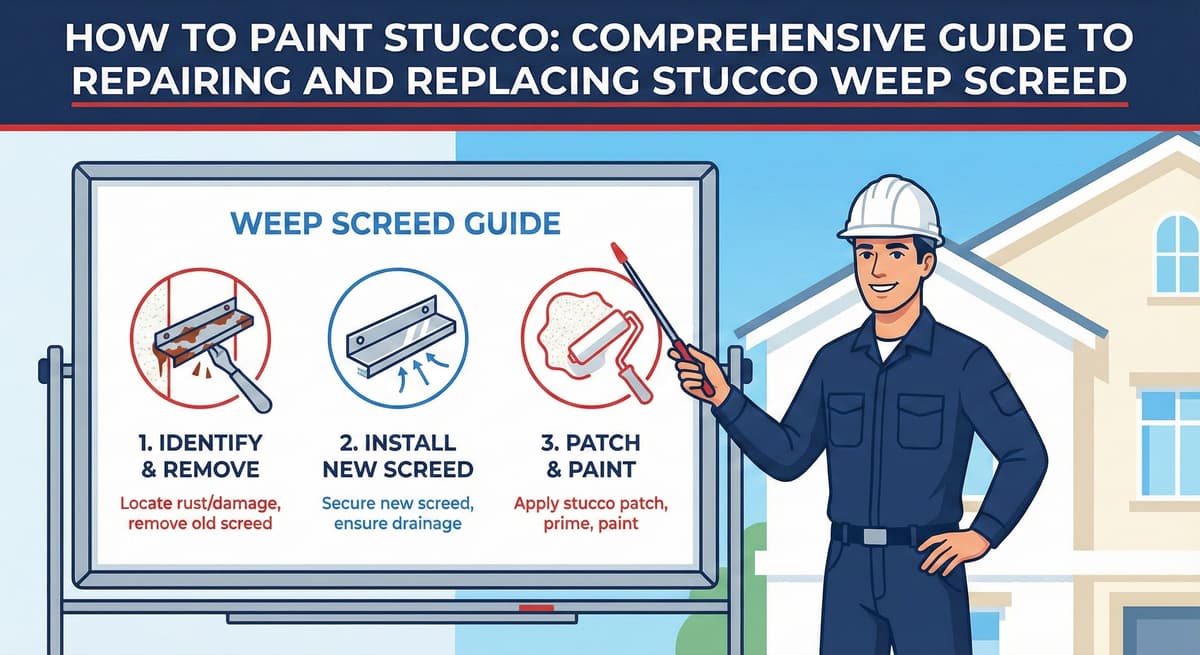
How to Repair & Replace Damaged Stucco Weep Screed: A Comprehensive Guide
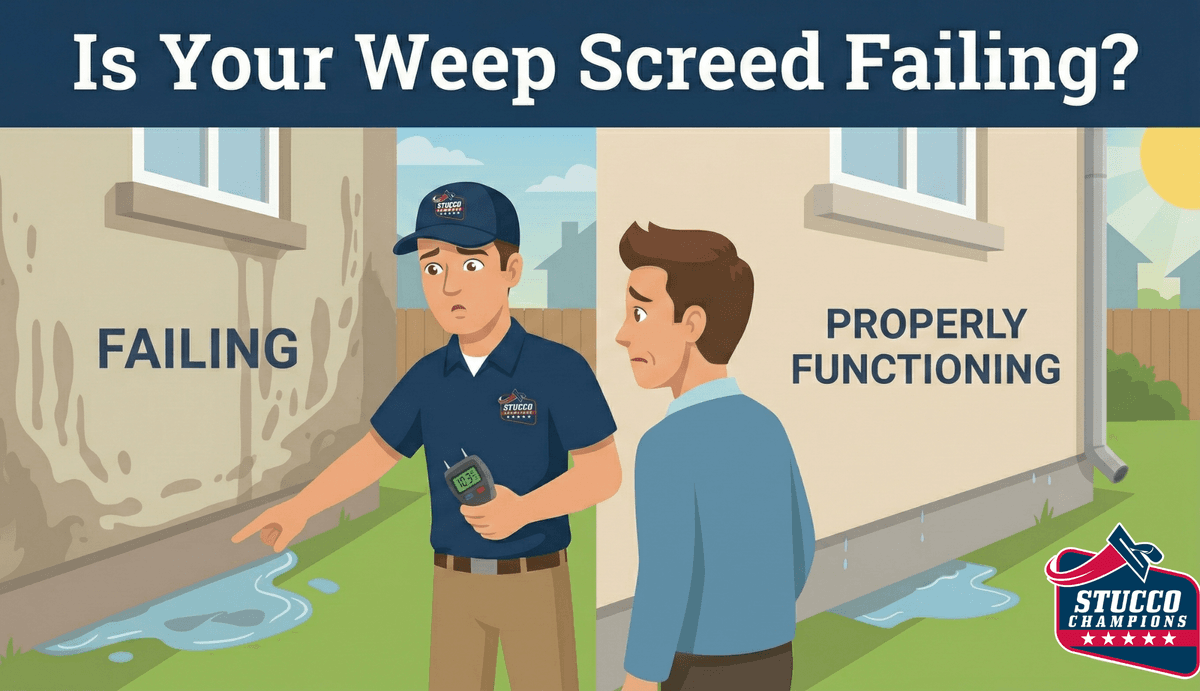
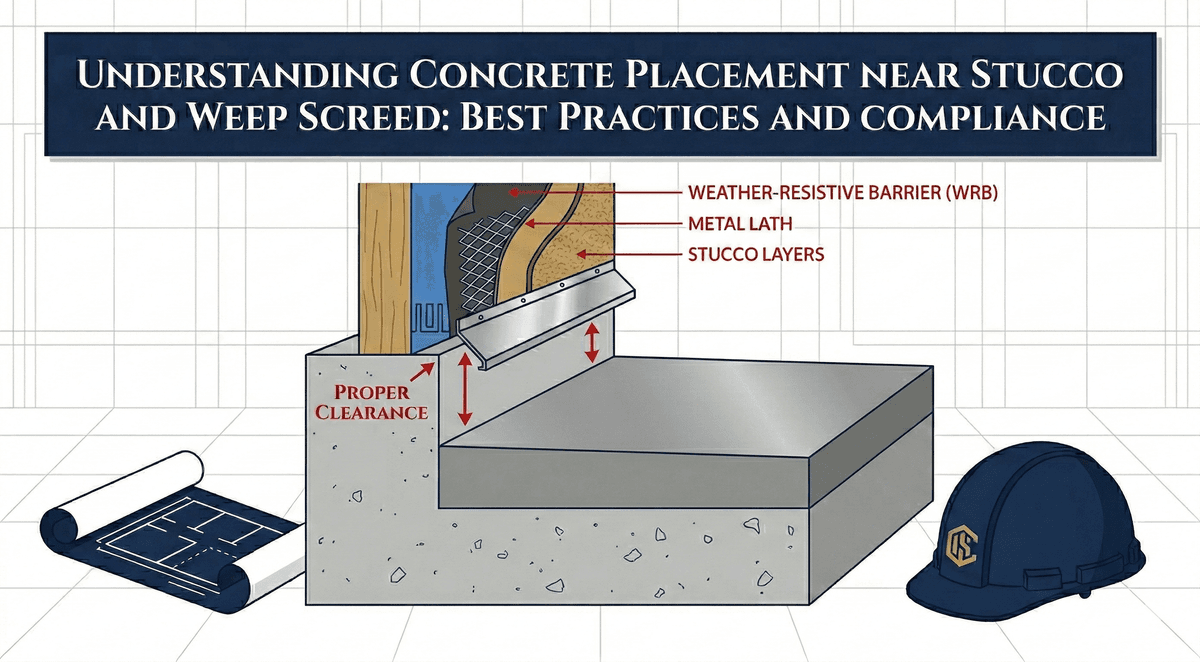
The weep screed is the hardest working component of your stucco system. It sits at the impact zone—right at the bottom of the wall where weed whackers, moisture, and soil contact do their damage. Over time, galvanized screeds can rust, bend, or pull away from the foundation.
Replacing a section of weep screed is not a cosmetic patch; it is a structural repair that requires breaking the waterproofing seal of your home. If done incorrectly, you will guide water directly into your wall cavity. This guide walks you through the professional protocol for replacing a failed screed without compromising the building envelope.
1. Diagnosis: Repair vs. Replace
Before you pick up a hammer, assess the damage.
- Bent Flange: If the metal is just bent but not rusted, you may be able to bend it back with pliers and touch up the paint.
- Rust Jacking: If the metal is corroded and swelling (rust jacking), it must be cut out. Rust expands and will crack the surrounding stucco endlessly.
- Buried Screed: If the screed is underground, you must perform a "Screed Lift" (raising the termination point), which is a larger project.
Free Assessment
Noticing Stucco Damage?
Get a free on-site assessment from a licensed contractor. $0 deposit, no obligation.
GET FREE ASSESSMENT2. Surgical Demolition (The 6-Inch Rule)
You cannot simply pull the old screed out; it is nailed to the studs 3.5 inches up the wall, behind the stucco.
The Protocol:
1. Snap a chalk line approximately 6 inches above the foundation.
2. Use a diamond-blade angle grinder to cut a clean, straight line through the stucco. Do not cut deep enough to slice the waterproofing paper or plywood.
3. Chip away the stucco below the cut to expose the wire lath and paper.
4. Remove the nails holding the old screed and slide it out.
3. The Waterproofing Fix (Critical Step)
This is where DIY repairs often fail. You cannot rely on caulk to seal the new paper to the old paper. You must create a Mechanical Counter-Flashing.
⚠️ The Slide-Under Method
Do NOT tape new paper over the old paper. Water will run down behind your new patch.
You must carefully slide the new strip of Grade D Building Paper UP and UNDER the existing building paper (at least 2 inches of overlap), and DOWN over the new metal screed flange. This creates a "shingle effect" so gravity pulls water out.
4. Installing the New Metal
Measure the gap and cut your new #7 Weep Screed.
Overlap Rule: If you are splicing two pieces of metal together, overlap the flanges by at least 1 inch. Nest them tightly so the front edge appears seamless.
Fastening: Nail the vertical flange to the studs or shear panel. Do not nail through the "V" channel where water drains.
5. Lathing and Patching
With the metal and paper secure, install new galvanized wire lath.
- Wire Tie-In: The new mesh must overlap the existing wire mesh by 2 inches. If you don't overlap the wire, the patch will crack at the seam.
- Base Coat: Apply a fiber-reinforced scratch and brown coat. Bring it flush with the existing wall minus 1/8". Allow this to cure for 24-48 hours.
6. Texture Matching
The final step is blending the repair.
Feathering: Use a sponge float or trowel to feather the new texture into the old.
Painting: A patch will never match the faded color of the old wall perfectly. Plan to paint the repair (or the whole wall) once the stucco has cured (pH neutral).
Conclusion: Respect the System
A weep screed repair is invasive. You are opening up the bottom of your house. If you are uncomfortable using a diamond saw or managing waterproofing laps, this is a job for a professional. A bad repair is worse than no repair because it traps water against the framing.
Related Resources
Last week, we shared Understanding Weep Screed in Stucco Systems: A Comprehensive Guide. Review the basics of how this component functions before you start cutting.
Frequently Asked Questions About Stucco
How much does stucco repair cost in Orange County and Los Angeles?+
Stucco repair typically ranges from $500 for minor crack patching to $5,000+ for full re-stucco of a single elevation. The exact cost depends on the damage type (hairline cracks, water damage, delamination, weep screed failure), the square footage involved, and whether the original three-coat or one-coat stucco system needs to be matched. Stucco Champions provides fixed-price written estimates after a free on-site assessment — no hourly billing, no surprise change orders. See our stucco repair cost guide for detailed pricing by repair type.
How long does stucco last in Southern California?+
Properly installed three-coat stucco lasts 50-80+ years in Southern California's climate. The most common failure points aren't the stucco itself — they're the supporting components: corroded weep screed, deteriorated building paper behind the stucco, and improperly sealed window flashing. Most "stucco failures" are actually moisture-intrusion failures that start at one of these points. Annual visual inspection catches problems before they spread, which is why we offer free weep screed assessments for homeowners in our service area.
Can I repair stucco myself, or do I need a contractor?+
Hairline cracks under 1/8 inch wide can be sealed with elastomeric caulk by a homeowner. Anything larger — pattern cracks, delamination (where stucco pulls away from the wall), water-damaged areas, or chimney/window leak repairs — requires a licensed contractor. Improper DIY repair on these is the #1 cause of repeat failures because the underlying cause (usually moisture) isn't addressed. California's CSLB requires a license for any stucco work over $500. We're a CSLB-licensed and insured contractor — see our contractor team for credentials.
How do I know if I need stucco repair vs. full re-stucco?+
If less than 30% of an elevation has visible damage, repair is the right call. If you see large areas of cracking, multiple zones of delamination, or the underlying paper and lath have rotted across an entire wall, full re-stucco of that elevation is more cost-effective long-term. Our free assessment includes a moisture survey and lath inspection so you get a defensible recommendation either way — not just a quote pushing whichever option costs more.
Do you offer warranties on stucco work?+
Yes. Stucco Champions provides a written 5-year workmanship warranty on all stucco repairs and a 10-year warranty on full re-stucco. We're a CSLB-licensed and insured contractor (license #1122006 — verifiable at cslb.ca.gov), which means our work is backed by California's contractor licensing board, not just our own promise. Request a free estimate to see the warranty terms in writing before you sign anything.
How long does a stucco repair take?+
Most patch repairs are completed in 1-2 days, including a 24-hour cure time before texture matching and color application. Full re-stucco of a single elevation runs 5-7 working days because each coat (scratch, brown, finish) needs to cure properly before the next is applied. We schedule around weather — California stucco needs daytime temperatures above 50°F with no rain forecast for at least 24 hours after each coat. Our crew shows up on time, every time.