A Comprehensive Guide to Weep Screed in Stucco Systems
Written by Stucco Champions — Southern California’s Authority on Exterior Plastering.
Is It Required? A Guide to Stucco Weep Screed Building Codes
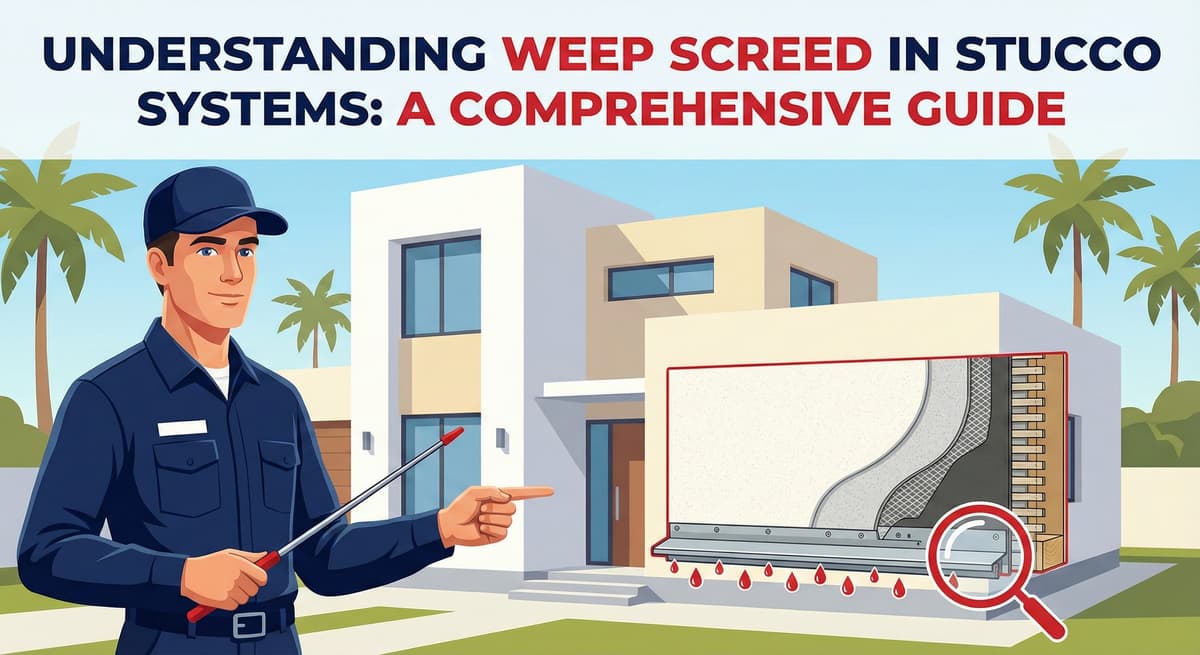
In the hierarchy of stucco components, the Weep Screed is often the most misunderstood. Is it just a piece of trim? Is it optional? Why do old homes lack one?
The short answer: If your walls are wood-framed, a weep screed is mandatory. According to the International Building Code (IBC) and the California Residential Code (CRC), this humble piece of metal is the primary defense against structural rot. This guide clarifies the code requirements, the exceptions, and what to do if your home is missing one.
Concerned about your home's moisture management? Start with our free Weep Screed Assessment.1. The Code Mandate (CRC R703.7.2.1)
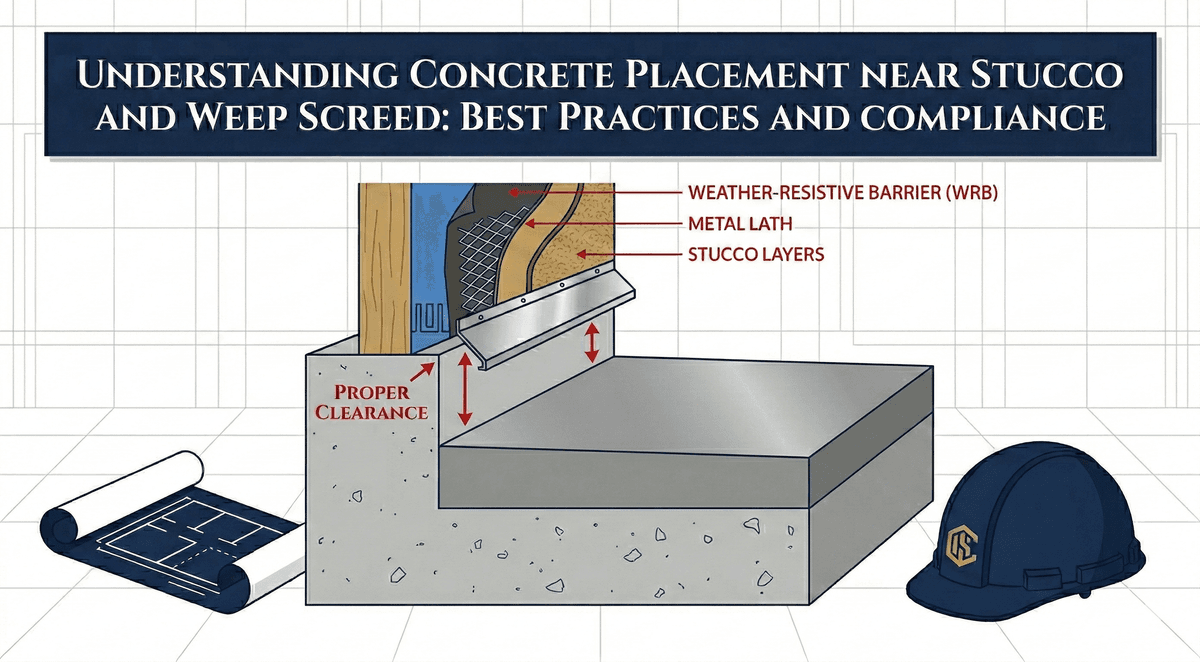
The code is explicit: "A minimum 0.019-inch corrosion-resistant weep screed or plastic weep screed, with a minimum vertical attachment flange of 3.5 inches, shall be provided at or below the foundation plate line on exterior stud walls."
Translation: If there is wood behind the stucco, you must have a way for water to get out. The weep screed must be installed at the very bottom of the framing (the sill plate) to prevent water from pooling against the wood.
Free Assessment
Noticing Stucco Damage?
Get a free on-site assessment from a licensed contractor. $0 deposit, no obligation.
GET FREE ASSESSMENT2. The "Clearance" Rule
It is not enough to simply install the screed; you must install it high enough off the ground to break the "capillary chain" (wicking). Code requires:
The 4-Inch / 2-Inch Rule- 4 Inches above Earth: If the ground is dirt, grass, or mulch.
- 2 Inches above Paving: If the ground is concrete, pavers, or asphalt.
If your screed is buried, it is a code violation that will eventually void your moisture warranty and rot your framing.
3. The Exception: Masonry Walls
There is one major exception where a weep screed is not required: CMU (Cinder Block) or Concrete Retaining Walls.
Why? Concrete walls do not rot. When applying stucco directly to masonry, we rely on a bond coat, not a drainage plane. Since there is no wood framing to protect and no cavity for water to pool in, the weep screed is functionally unnecessary (though some installers still use it for a straight edge).
4. The "Old Home" Dilemma
If your home was built in 1960, you likely don't have a weep screed. Does this mean your house is illegal?
No. Codes are not retroactive. Your home is "grandfathered" in. However, this grandfather status ends if you perform a major renovation.
⚠️ The Trigger RuleIf you re-stucco your home or perform structural repairs to the exterior walls, you are usually required to bring the waterproofing up to current code. This means you must retrofit a weep screed during the renovation.
5. Beyond Drainage: The Depth Gauge
While drainage is the primary legal requirement, the weep screed serves a second technical purpose: Thickness Control.
The "ground" (the nose of the screed) sticks out 7/8" from the wall. This gives the plasterer a rigid guide to ensure the stucco is applied at the proper thickness. Without it, the stucco thickness would vary, leading to waviness and potential cracking.
6. Troubleshooting Missing Screeds
If you own an older home without a screed, inspect the foundation line annually.
- Good Sign: The stucco stops cleanly above the soil, even without metal.
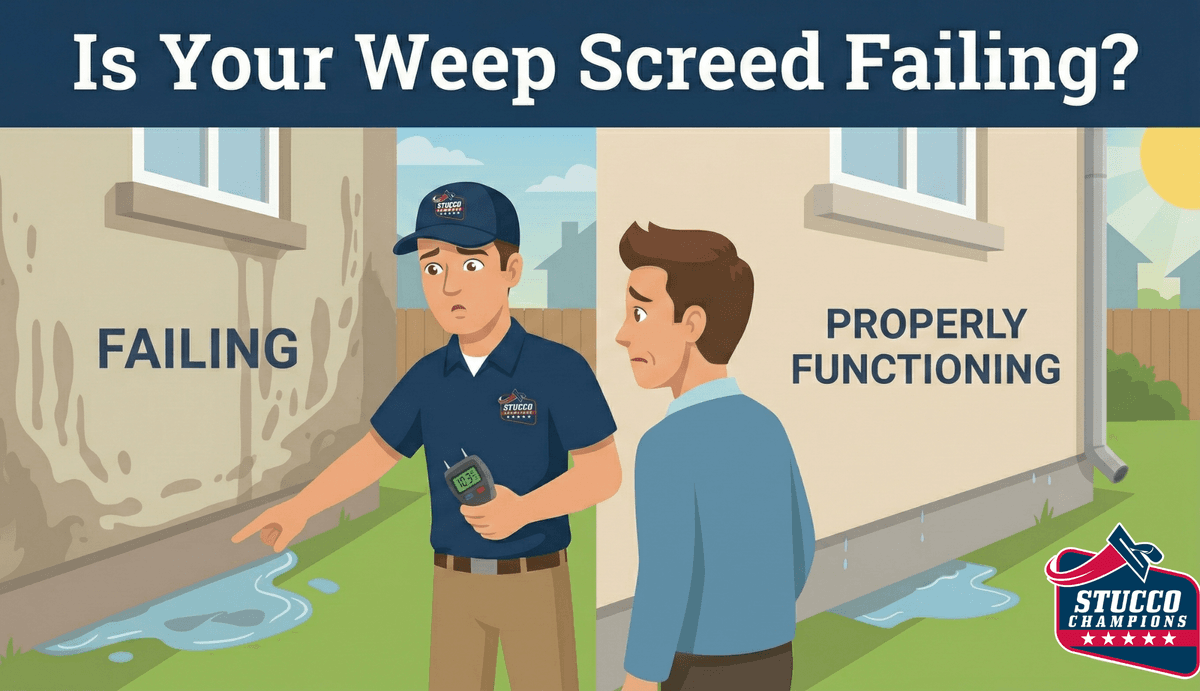
- Bad Sign: The stucco runs directly into the dirt. This is a conduit for termites and moisture. Even if you don't install a full screed, you should excavate the soil to create a gap.
Conclusion: A Non-Negotiable Standard
For modern wood-framed construction, the weep screed is not optional; it is the most critical component of the building envelope. It defines the drainage plane, sets the stucco thickness, and protects the foundation from rot.
Is Your Weep Screed Up to Code?
Our free visual self-check helps you assess your home's moisture management in 2 minutes.
Frequently Asked Questions About Stucco
How much does stucco repair cost in Orange County and Los Angeles?+
Stucco repair typically ranges from $500 for minor crack patching to $5,000+ for full re-stucco of a single elevation. The exact cost depends on the damage type (hairline cracks, water damage, delamination, weep screed failure), the square footage involved, and whether the original three-coat or one-coat stucco system needs to be matched. Stucco Champions provides fixed-price written estimates after a free on-site assessment — no hourly billing, no surprise change orders. See our stucco repair cost guide for detailed pricing by repair type.
How long does stucco last in Southern California?+
Properly installed three-coat stucco lasts 50-80+ years in Southern California's climate. The most common failure points aren't the stucco itself — they're the supporting components: corroded weep screed, deteriorated building paper behind the stucco, and improperly sealed window flashing. Most "stucco failures" are actually moisture-intrusion failures that start at one of these points. Annual visual inspection catches problems before they spread, which is why we offer free weep screed assessments for homeowners in our service area.
Can I repair stucco myself, or do I need a contractor?+
Hairline cracks under 1/8 inch wide can be sealed with elastomeric caulk by a homeowner. Anything larger — pattern cracks, delamination (where stucco pulls away from the wall), water-damaged areas, or chimney/window leak repairs — requires a licensed contractor. Improper DIY repair on these is the #1 cause of repeat failures because the underlying cause (usually moisture) isn't addressed. California's CSLB requires a license for any stucco work over $500. We're a CSLB-licensed and insured contractor — see our contractor team for credentials.
How do I know if I need stucco repair vs. full re-stucco?+
If less than 30% of an elevation has visible damage, repair is the right call. If you see large areas of cracking, multiple zones of delamination, or the underlying paper and lath have rotted across an entire wall, full re-stucco of that elevation is more cost-effective long-term. Our free assessment includes a moisture survey and lath inspection so you get a defensible recommendation either way — not just a quote pushing whichever option costs more.
Do you offer warranties on stucco work?+
Yes. Stucco Champions provides a written 5-year workmanship warranty on all stucco repairs and a 10-year warranty on full re-stucco. We're a CSLB-licensed and insured contractor (license #1122006 — verifiable at cslb.ca.gov), which means our work is backed by California's contractor licensing board, not just our own promise. Request a free estimate to see the warranty terms in writing before you sign anything.
How long does a stucco repair take?+
Most patch repairs are completed in 1-2 days, including a 24-hour cure time before texture matching and color application. Full re-stucco of a single elevation runs 5-7 working days because each coat (scratch, brown, finish) needs to cure properly before the next is applied. We schedule around weather — California stucco needs daytime temperatures above 50°F with no rain forecast for at least 24 hours after each coat. Our crew shows up on time, every time.