The 4-Inch Rule: Critical Weep Screed Codes Every Homeowner Must Know
Written by Stucco Champions — Southern California’s Authority on Exterior Plastering.
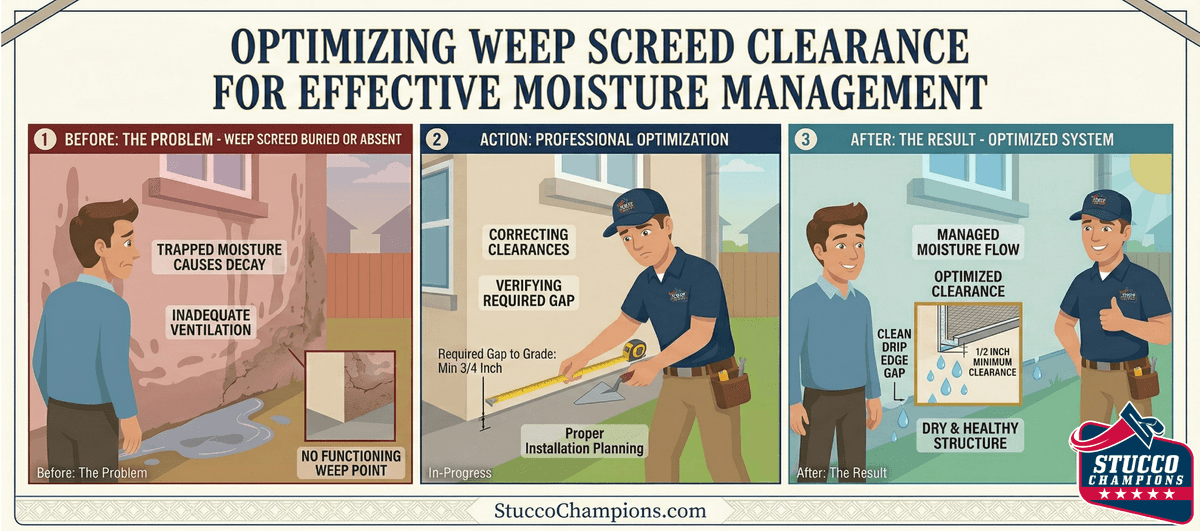
The 4-Inch Rule: Optimizing Weep Screed Clearance for Moisture Management
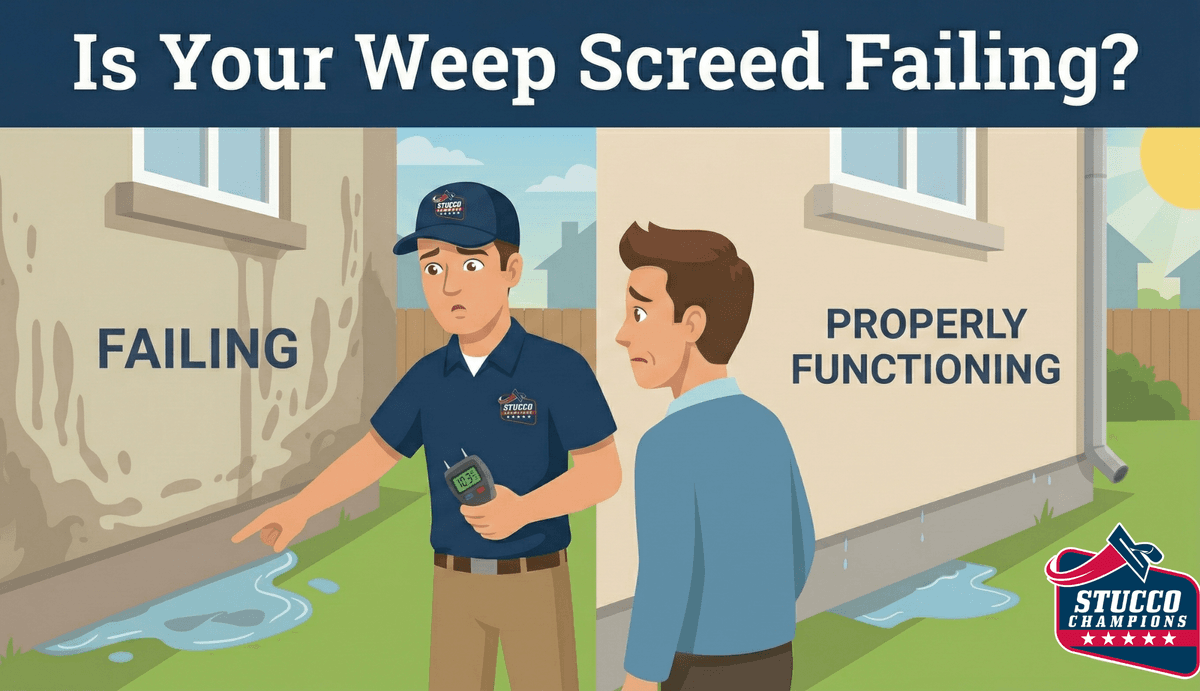
If there is one detail that causes more catastrophic damage to Southern California homes than any other, it is improper weep screed clearance. Many homeowners—and unfortunately, many landscapers and concrete contractors—view the gap at the bottom of a stucco wall as a cosmetic flaw. They try to hide it with mulch, flower beds, or concrete patios.
This is a critical mistake. That "gap" is an engineered drainage zone. Burying it turns your stucco cladding into a straw that sucks moisture into your framing. This guide explains the code requirements and how to fix a buried screed.
1. The Science: Gravity vs. Capillary Action
The Weep Screed at the bottom of your wall serves two opposing functions involving water:
- Gravity (Good): It allows water trapped behind the stucco to drain out and drip onto the ground.
- Capillary Action (Bad): Stucco is porous cement. If it touches wet soil or standing water, it wicks moisture upward against gravity (like a paper towel dipped in water).
The clearance gap breaks the capillary chain. Without it, the water wicks up 6 to 12 inches, saturating the wood mudsill and studs, leading to dry rot and termite infestation.
Free Assessment
Noticing Stucco Damage?
Get a free on-site assessment from a licensed contractor. $0 deposit, no obligation.
GET FREE ASSESSMENT2. The Code Requirements (CRC / ASTM C1063)
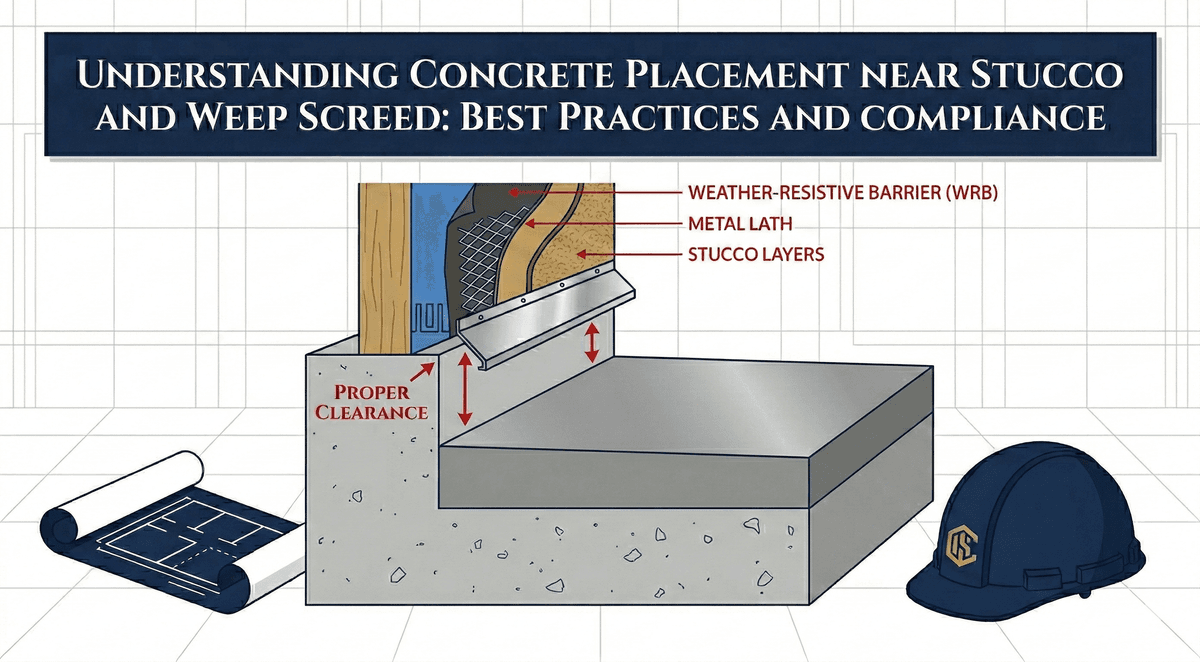
The California Residential Code (CRC R703.7.2.1) and ASTM standards are explicit about these distances. They are not suggestions; they are mandatory for warranty and structural safety.
Earth Clearance: 4 InchesIf your stucco meets natural ground (dirt, grass, mulch, planter beds), the bottom of the weep screed must be at least 4 inches above the grade. Soil holds moisture for days after a rain or sprinkler cycle, necessitating a larger safety gap.
Paved Clearance: 2 InchesIf your stucco meets a hard surface (concrete patio, driveway, pavers), the bottom of the weep screed must be at least 2 inches above the finished surface. Hardscapes splash water up during rain, so this gap prevents "splash back" intrusion.
3. Common Violations: How Screeds Get Buried
We rarely see homes built wrong; we see homes landscaped wrong.
- The "Flower Bed" Raise: A homeowner adds fresh topsoil and mulch to a planter bed every spring. Over 10 years, the grade rises 5 inches, burying the screed.
- The Paver Overlay: A contractor installs pavers directly on top of an old concrete patio. This raises the floor height by 3 inches, covering the weep screed.
- Reverse Slope: A yard that slopes toward the house rather than away from it, pushing water against the screed during storms.
4. The Fix: Two Options for buried Screeds
If you inspect your home and find the stucco disappearing into the dirt or concrete, you have two options. Ignoring it is not one of them.
Option A: Lower the Grade (The Landscaping Fix)
This is the least invasive method.
Action: Excavate the dirt, rock, or mulch around the perimeter of the home to restore the 4-inch clearance.
Drainage: You may need to install a French drain or a swale to ensure water moves away from the exposed foundation.
Option B: The "Screed Lift" (The Stucco Fix)
If a new concrete patio was poured too high, you cannot easily lower the concrete. You must raise the stucco termination point.
Action:
- We cut the stucco wall horizontally, 6-8 inches above the new patio grade.
- We remove the bottom strip of stucco and existing screed.
- We install a new Retrofit Weep Screed at the new proper height.
- We install proper counter-flashing (shingle lap) and patch the area to match.
We often see homeowners trying to "fix" the gap by caulking the bottom of the weep screed to the concrete. Do not do this. You are sealing the exit door. Water will back up inside your wall and rot your house from the inside out.
Conclusion
The gap at the bottom of your house isn't a mistake; it’s the exhaust pipe for your home's moisture system. Respect the gap. Keep mulch 4 inches down and concrete 2 inches down, and your stucco will last a lifetime.
Related ResourcesLast week, we shared Concrete Placement Near Stucco and Weep Screed. If you are pouring a new driveway, read this first to avoid costly mistakes.
Frequently Asked Questions About Stucco
How much does stucco repair cost in Orange County and Los Angeles?+
Stucco repair typically ranges from $500 for minor crack patching to $5,000+ for full re-stucco of a single elevation. The exact cost depends on the damage type (hairline cracks, water damage, delamination, weep screed failure), the square footage involved, and whether the original three-coat or one-coat stucco system needs to be matched. Stucco Champions provides fixed-price written estimates after a free on-site assessment — no hourly billing, no surprise change orders. See our stucco repair cost guide for detailed pricing by repair type.
How long does stucco last in Southern California?+
Properly installed three-coat stucco lasts 50-80+ years in Southern California's climate. The most common failure points aren't the stucco itself — they're the supporting components: corroded weep screed, deteriorated building paper behind the stucco, and improperly sealed window flashing. Most "stucco failures" are actually moisture-intrusion failures that start at one of these points. Annual visual inspection catches problems before they spread, which is why we offer free weep screed assessments for homeowners in our service area.
Can I repair stucco myself, or do I need a contractor?+
Hairline cracks under 1/8 inch wide can be sealed with elastomeric caulk by a homeowner. Anything larger — pattern cracks, delamination (where stucco pulls away from the wall), water-damaged areas, or chimney/window leak repairs — requires a licensed contractor. Improper DIY repair on these is the #1 cause of repeat failures because the underlying cause (usually moisture) isn't addressed. California's CSLB requires a license for any stucco work over $500. We're a CSLB-licensed and insured contractor — see our contractor team for credentials.
How do I know if I need stucco repair vs. full re-stucco?+
If less than 30% of an elevation has visible damage, repair is the right call. If you see large areas of cracking, multiple zones of delamination, or the underlying paper and lath have rotted across an entire wall, full re-stucco of that elevation is more cost-effective long-term. Our free assessment includes a moisture survey and lath inspection so you get a defensible recommendation either way — not just a quote pushing whichever option costs more.
Do you offer warranties on stucco work?+
Yes. Stucco Champions provides a written 5-year workmanship warranty on all stucco repairs and a 10-year warranty on full re-stucco. We're a CSLB-licensed and insured contractor (license #1122006 — verifiable at cslb.ca.gov), which means our work is backed by California's contractor licensing board, not just our own promise. Request a free estimate to see the warranty terms in writing before you sign anything.
How long does a stucco repair take?+
Most patch repairs are completed in 1-2 days, including a 24-hour cure time before texture matching and color application. Full re-stucco of a single elevation runs 5-7 working days because each coat (scratch, brown, finish) needs to cure properly before the next is applied. We schedule around weather — California stucco needs daytime temperatures above 50°F with no rain forecast for at least 24 hours after each coat. Our crew shows up on time, every time.