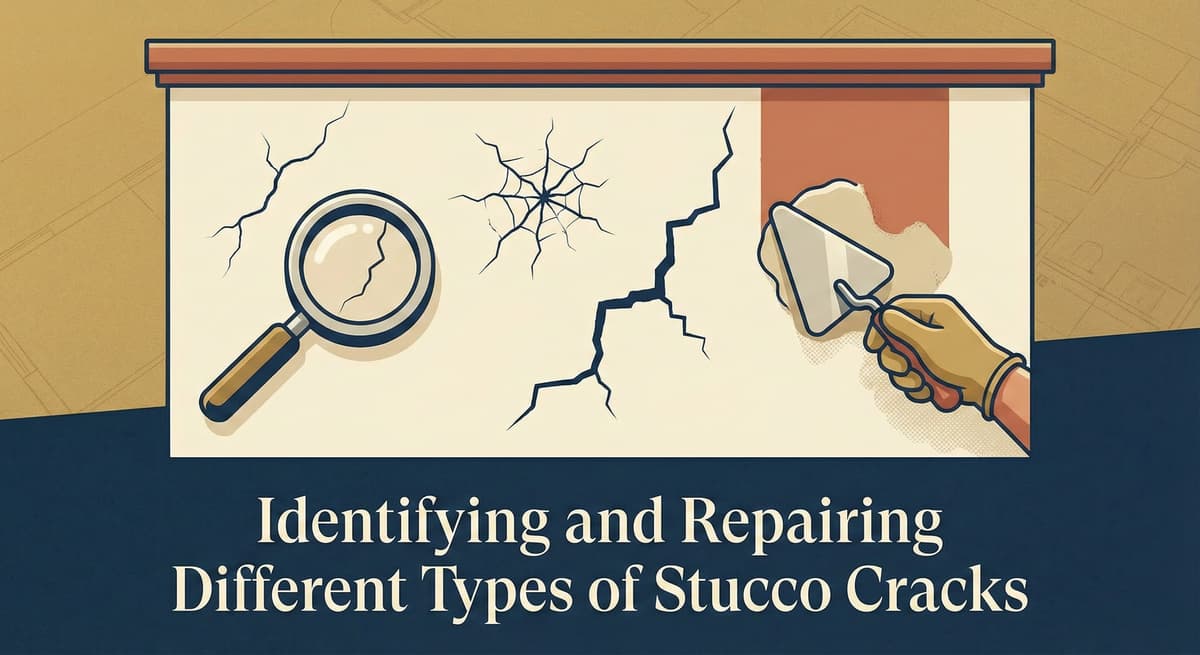
Identifying and Repairing Stucco Cracks
Written by Stucco Champions — Southern California’s Authority on Exterior Plastering.
The Crack Guide: Diagnosing and Repairing Stucco Stress
Stucco is a cement-based product, and like concrete driveways or sidewalks, it follows one golden rule of physics: It will eventually crack.
However, not all cracks are created equal. Some are minor cosmetic blemishes caused by our intense Southern California heat cycles, while others are "check engine lights" indicating structural failure or water intrusion. This guide aims to demystify the fractures in your walls—what causes them, how to fix them, and when to call in the cavalry.
1. The Mechanics of Stucco Stress
In new construction, settling is the primary culprit. As fresh lumber dries and twists, and the concrete foundation finds its footing in the soil, the rigid stucco shell reacts by fracturing. In older homes, the causes are often environmental:
- Seismic Activity: SoCal’s constant micro-tremors put shear stress on rigid walls.
- Thermal Shock: Rapid heating during the day and cooling at night causes expansion and contraction.
- Moisture Cycling: Wood framing swells when wet and shrinks when dry, stressing the lath and paper behind the stucco.
Free Assessment
Noticing Stucco Damage?
Get a free on-site assessment from a licensed contractor. $0 deposit, no obligation.
GET FREE ASSESSMENT2. The 4 Most Common Crack Classifications
1. Hairline Cracks (The "Cosmetic" Crack)
Appearance: Thin, spider-web lines less than 1/16 inch wide.
The Cause: Normal hydration shrinkage during the curing process.
The Fix: This is a safe DIY Project. Use a high-quality Sanded Acrylic Caulk to bridge the gap.
Never use silicone caulk on stucco. Paint will not adhere to silicone, leaving you with shiny, unpaintable scars on your wall forever.
2. Re-Entrant / Corner Cracks
Appearance: Diagonal cracks radiating from the corners of windows and doors.
The Cause: These are stress points. ASTM C1063 requires "butterfly" reinforcement (extra strips of lath) at these corners to mitigate this, but they are often omitted in rapid construction.
The Fix: If minor, acrylic caulk. If wide/moving, the area may need to be broken out and re-lathed with proper corner reinforcement.
3. Crazing / Map Cracking
Appearance: A network of fine, shallow cracks that looks like a shattered windshield or a road map.
The Cause: This is an application error known as "flash drying." It happens when the finish coat is applied on a hot, windy day and moisture evaporates too quickly, preventing a proper chemical cure.
The Fix: Standard patching will look patchy. The best solution is often a Fog Coat (cement stain) to fill the pores or a complete Acrylic Resurface to bridge the network.
4. Structural Cracks (The "Danger" Crack)
Appearance: Cracks wider than 1/8 inch (the width of a nickel), often with one side of the wall sticking out further than the other (offset).
The Cause: Foundation settling, compromised shear walls, or severe water damage rotting the studs behind the paper.
The Fix: Do not caulk this. Covering a structural crack traps moisture inside a rotting wall. This requires professional demolition to inspect the framing and lath.
3. Advanced Diagnostics: Reading the Patterns
The shape and frequency of the cracks often tell us exactly how the installation failed:
🔍 Diagnostic Guide- Vertical Cracks Every 4 Feet: This is called "Telegraphing." It usually means the plywood/OSB sheathing underneath wasn't spaced correctly (1/8" gap required), and the panel joints are expanding.
- Long Horizontal Cracks: This often indicates that the metal lath (wire mesh) wasn't overlapped properly. Codes require a minimum 1-inch overlap; if they just butted the wire together, the stucco will crack along the seam.
- Straight Lines at Material Changes: Where stucco meets wood siding or stone, a crack is inevitable unless a Control Joint (expansion flange) was installed to allow independent movement.
4. Repair Expectations and Costs
While we generally advise against DIY repairs for structural issues, minor maintenance is part of homeownership.
- DIY Hairline Repair: Cost: $30–$50 (Acrylic Caulk + Sponge). Time: 1–2 Hours. Do not overfill; wipe excess with a damp sponge to blend the texture.
- Foam Trim Repair: Cost: $100–$200. Foam moldings often crack at the seams. You must "V-out" the crack, apply fiberglass mesh tape, and re-coat with a polymer-modified base coat before texturing.
- Professional Structural Repair: Cost: Typically $650 minimum for mobilization, ranging up to $2,500+ depending on scope. Includes breakout, lath replacement, paper integration, and 3-coat patch.
5. When to Call Stucco Champions
DIY is great for maintenance, but know your limits. You should call a professional if:
- The Wall Sounds Hollow: Tap the wall. If it sounds hollow or loose, the stucco has delaminated (detached) from the lath.
- Rust Stains Appear: If brown water is weeping from a crack, the galvanized wire lath inside your wall is corroding.
- Diagonal Stair-Step Cracks: These are classic signs of foundation movement or earthquake stress that require structural evaluation.
Missed last week? Check out What Is a Three Coat Stucco System? to learn why the traditional method is still the gold standard for durability in California.
If you are dealing with water intrusion issues, review our guide on Identifying and Repairing Stucco Window Leaks.
Frequently Asked Questions About Stucco
How much does stucco repair cost in Orange County and Los Angeles?+
Stucco repair typically ranges from $500 for minor crack patching to $5,000+ for full re-stucco of a single elevation. The exact cost depends on the damage type (hairline cracks, water damage, delamination, weep screed failure), the square footage involved, and whether the original three-coat or one-coat stucco system needs to be matched. Stucco Champions provides fixed-price written estimates after a free on-site assessment — no hourly billing, no surprise change orders. See our stucco repair cost guide for detailed pricing by repair type.
How long does stucco last in Southern California?+
Properly installed three-coat stucco lasts 50-80+ years in Southern California's climate. The most common failure points aren't the stucco itself — they're the supporting components: corroded weep screed, deteriorated building paper behind the stucco, and improperly sealed window flashing. Most "stucco failures" are actually moisture-intrusion failures that start at one of these points. Annual visual inspection catches problems before they spread, which is why we offer free weep screed assessments for homeowners in our service area.
Can I repair stucco myself, or do I need a contractor?+
Hairline cracks under 1/8 inch wide can be sealed with elastomeric caulk by a homeowner. Anything larger — pattern cracks, delamination (where stucco pulls away from the wall), water-damaged areas, or chimney/window leak repairs — requires a licensed contractor. Improper DIY repair on these is the #1 cause of repeat failures because the underlying cause (usually moisture) isn't addressed. California's CSLB requires a license for any stucco work over $500. We're a CSLB-licensed and insured contractor — see our contractor team for credentials.
How do I know if I need stucco repair vs. full re-stucco?+
If less than 30% of an elevation has visible damage, repair is the right call. If you see large areas of cracking, multiple zones of delamination, or the underlying paper and lath have rotted across an entire wall, full re-stucco of that elevation is more cost-effective long-term. Our free assessment includes a moisture survey and lath inspection so you get a defensible recommendation either way — not just a quote pushing whichever option costs more.
Do you offer warranties on stucco work?+
Yes. Stucco Champions provides a written 5-year workmanship warranty on all stucco repairs and a 10-year warranty on full re-stucco. We're a CSLB-licensed and insured contractor (license #1122006 — verifiable at cslb.ca.gov), which means our work is backed by California's contractor licensing board, not just our own promise. Request a free estimate to see the warranty terms in writing before you sign anything.
How long does a stucco repair take?+
Most patch repairs are completed in 1-2 days, including a 24-hour cure time before texture matching and color application. Full re-stucco of a single elevation runs 5-7 working days because each coat (scratch, brown, finish) needs to cure properly before the next is applied. We schedule around weather — California stucco needs daytime temperatures above 50°F with no rain forecast for at least 24 hours after each coat. Our crew shows up on time, every time.