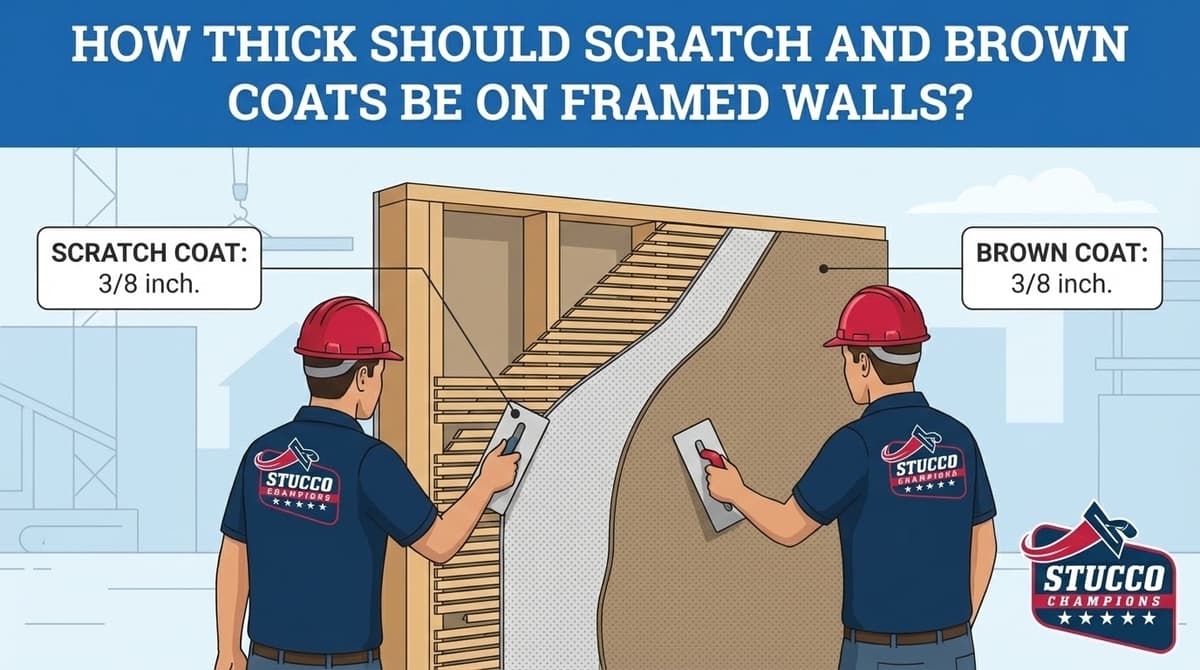
Ultimate Guide to Plaster Stop in Stucco Applications
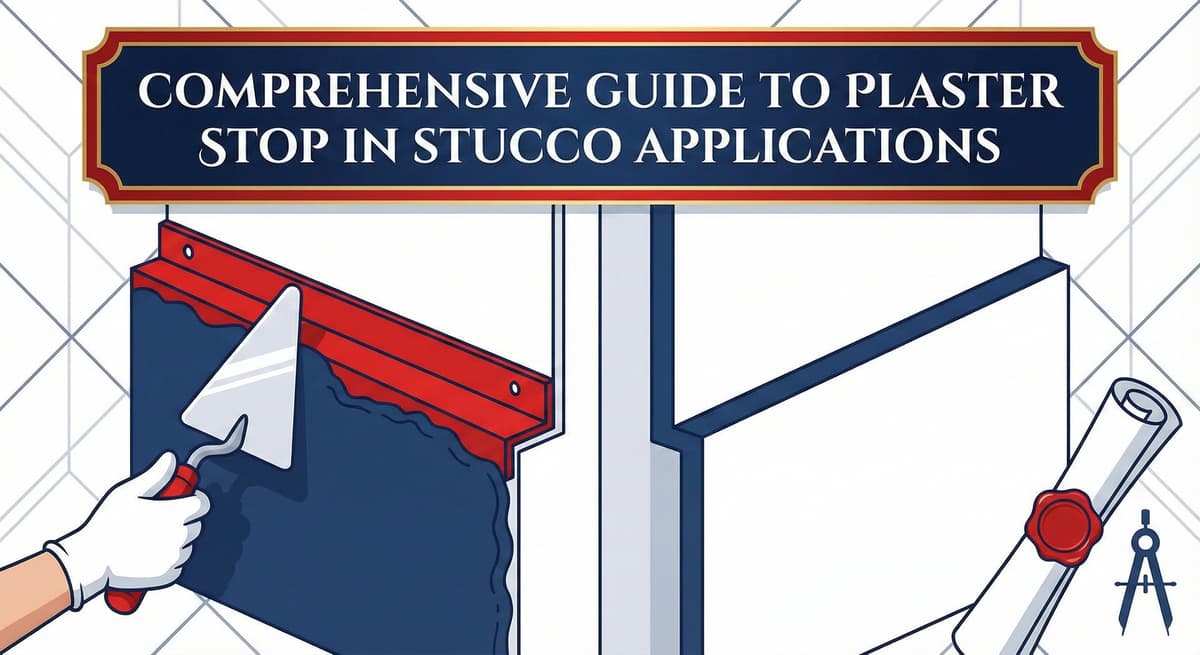
Written by Stucco Champions — Southern California’s Authority on Exterior Plastering.
The Clean Edge: A Technical Guide to Plaster Stop (Casing Bead)
In high-quality stucco applications, how you end the wall is just as important as how you build it. While the weep screed handles drainage at the bottom, the Plaster Stop (technically known as a Casing Bead) manages terminations everywhere else.
Often referred to as "J-Metal" or "J-Stop" due to its profile shape, this component provides a straight, rigid ground for the plasterer to gauge cement thickness. More importantly, it separates the stucco from dissimilar materials (like wood doors or vinyl windows) to prevent cracking.
1. What is a Plaster Stop?
A Plaster Stop is a metal termination bead with a solid back flange and a solid return leg. Unlike a weep screed, it has no drainage holes.
It is designed to "stop" the stucco at a specific point, creating a clean, finished edge. It typically matches the thickness of the stucco system (e.g., 7/8" for standard 3-coat, or 3/8" for 1-coat/thin-coat systems).
⚠️ CRITICAL WARNINGNever use Plaster Stop at the bottom of a wall. Because it lacks weep holes, using it at the foundation line will trap water inside the wall, rotting your framing. Foundation terminations always require a Weep Screed.
Free Assessment
Noticing Stucco Damage?
Get a free on-site assessment from a licensed contractor. $0 deposit, no obligation.
GET FREE ASSESSMENT2. Primary Applications
While weep screed is mandatory by code, Plaster Stop is often considered "best practice" for clean aesthetics and crack prevention in the following areas:
- Exterior Door Frames: Where stucco meets the wooden jam of a front door or French door.
- Flush Windows: Around retro-fit windows or flush-mounted aluminum sliders common in older SoCal homes.
- Material Transitions: Where stucco ends and another siding material (like stone veneer, fiber cement, or wood siding) begins.
- Soffit Intersections: At the top of the wall where the stucco meets roof rafters (if no frieze block is present).
3. The "Gap" Rule (ASTM C1063)
The most common mistake we see in DIY (and even some pro) installations is butt-jointing the Plaster Stop tight against the door or window.
Stucco and wood expand at different rates. If the metal is tight against the wood, the movement will cause the stucco to crack or the metal to buckle.
The Correct InstallationYou must leave a gap (typically 3/8-inch) between the Plaster Stop and the adjacent material. This gap creates a channel that is later filled with a Backer Rod and High-Quality Sealant (Polyurethane Caulk). This flexible joint absorbs movement and prevents water intrusion.
4. Cost vs. Aesthetics
Using Casing Beads adds material and labor costs to a project. The cheaper alternative—often seen in rapid tract housing—is simply returning the stucco directly against the wood (a "stucco return").
However, the "stucco return" method is prone to jagged edges and eventual separation cracks. Investing in Casing Beads ensures a crisp, straight architectural line that looks polished and protects the edge of the cement from chipping.
5. Material Selection for Coastal Homes
In Newport Beach, Laguna, and coastal LA, standard galvanized metal can rust prematurely due to salt air. For these areas, we recommend:
- Zinc Alloy: Highly resistant to corrosion (though more expensive).
- Vinyl (PVC): Impervious to rust and impact-resistant, though some purists prefer the rigidity of metal.
Last week, we discussed what happens when metal components fail in our guide: Comprehensive Guide to Dealing with Rusty Weep Screed. If you notice rust stains on your walls, check it out for repair solutions.
Frequently Asked Questions About Stucco
How much does stucco repair cost in Orange County and Los Angeles?+
Stucco repair typically ranges from $500 for minor crack patching to $5,000+ for full re-stucco of a single elevation. The exact cost depends on the damage type (hairline cracks, water damage, delamination, weep screed failure), the square footage involved, and whether the original three-coat or one-coat stucco system needs to be matched. Stucco Champions provides fixed-price written estimates after a free on-site assessment — no hourly billing, no surprise change orders. See our stucco repair cost guide for detailed pricing by repair type.
How long does stucco last in Southern California?+
Properly installed three-coat stucco lasts 50-80+ years in Southern California's climate. The most common failure points aren't the stucco itself — they're the supporting components: corroded weep screed, deteriorated building paper behind the stucco, and improperly sealed window flashing. Most "stucco failures" are actually moisture-intrusion failures that start at one of these points. Annual visual inspection catches problems before they spread, which is why we offer free weep screed assessments for homeowners in our service area.
Can I repair stucco myself, or do I need a contractor?+
Hairline cracks under 1/8 inch wide can be sealed with elastomeric caulk by a homeowner. Anything larger — pattern cracks, delamination (where stucco pulls away from the wall), water-damaged areas, or chimney/window leak repairs — requires a licensed contractor. Improper DIY repair on these is the #1 cause of repeat failures because the underlying cause (usually moisture) isn't addressed. California's CSLB requires a license for any stucco work over $500. We're a CSLB-licensed and insured contractor — see our contractor team for credentials.
How do I know if I need stucco repair vs. full re-stucco?+
If less than 30% of an elevation has visible damage, repair is the right call. If you see large areas of cracking, multiple zones of delamination, or the underlying paper and lath have rotted across an entire wall, full re-stucco of that elevation is more cost-effective long-term. Our free assessment includes a moisture survey and lath inspection so you get a defensible recommendation either way — not just a quote pushing whichever option costs more.
Do you offer warranties on stucco work?+
Yes. Stucco Champions provides a written 5-year workmanship warranty on all stucco repairs and a 10-year warranty on full re-stucco. We're a CSLB-licensed and insured contractor (license #1122006 — verifiable at cslb.ca.gov), which means our work is backed by California's contractor licensing board, not just our own promise. Request a free estimate to see the warranty terms in writing before you sign anything.
How long does a stucco repair take?+
Most patch repairs are completed in 1-2 days, including a 24-hour cure time before texture matching and color application. Full re-stucco of a single elevation runs 5-7 working days because each coat (scratch, brown, finish) needs to cure properly before the next is applied. We schedule around weather — California stucco needs daytime temperatures above 50°F with no rain forecast for at least 24 hours after each coat. Our crew shows up on time, every time.