Ultimate Guide to Rusty Weep Screed
The Complete Guide to Rusty Weep Screed Repair in Southern California
Written by Stucco Champions — Southern California’s Authority on Exterior Plastering
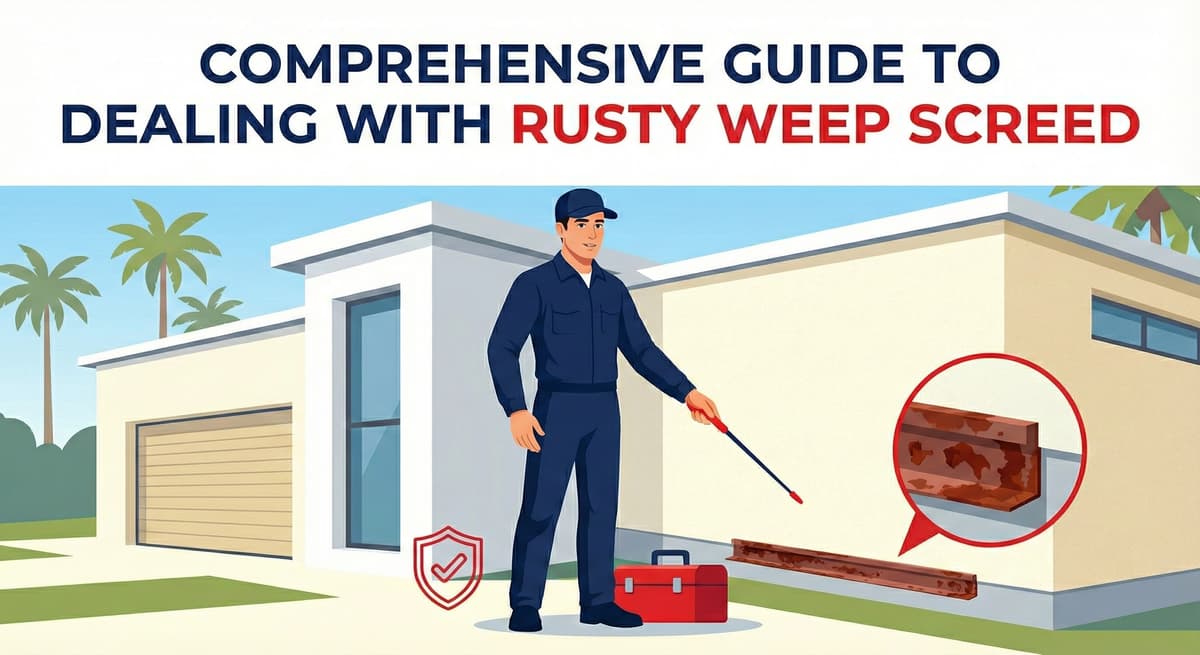
If you own a stucco home in Newport Beach, Mission Viejo, or anywhere in Orange County, you have likely seen it: that jagged, orange-brown line running along the bottom edge of your exterior walls. That is a rusted weep screed.
While often dismissed as a cosmetic annoyance, rust on your foundation screed is a diagnostic indicator. It tells us that moisture is interacting with the metal lath and screed assembly in a way that exceeds the galvanized coating's ability to protect it.
Here is the technical breakdown of why this happens, the code requirements you need to know, and how we fix it correctly.
What is Weep Screed and Why Does It Rust?
Weep screed is a metal flashing installed at the foundation plate line of exterior stucco walls. Its primary function, per ASTM C1063, is to allow trapped moisture to exit the stucco assembly and drain away from the building.
Most weep screeds are manufactured from 26-gauge galvanized steel. Galvanization is a zinc coating applied to steel to prevent corrosion. However, zinc is a "sacrificial" coating. Over time, exposure to the distinct elements of Southern California—specifically salt air in coastal zones and hard water from irrigation—will wear that coating down, exposing the raw steel to oxidation (rust).
Free Assessment
Noticing Stucco Damage?
Get a free on-site assessment from a licensed contractor. $0 deposit, no obligation.
GET FREE ASSESSMENTThe "Buried Screed" Violation
The most common cause of accelerated rust is improper grading. According to the California Residential Code (CRC) and ASTM C1063, the weep screed must maintain specific clearances to function:
- 4 inches of clearance above earth or landscape.
- 2 inches of clearance above paved surfaces (concrete/pavers).
When homeowners or landscapers pile mulch, soil, or pour concrete flush against the stucco, the weep holes are blocked. Moisture cannot escape, and the metal sits in damp soil permanently. This guarantees rot and rust.
Common Causes of Screed Corrosion
Beyond burying the screed, several factors contribute to failure:
- Sprinkler Overspray: Hard water hitting the wall daily is the enemy of galvanized steel. The minerals calcify and eat through the zinc coating.
- The "Salt Air" Factor: In coastal areas like Huntington Beach or Laguna, the saline atmosphere accelerates oxidation significantly faster than inland. For these homes, we often recommend vinyl (PVC) weep screeds meeting ASTM D1784 standards, as they cannot rust.
- Blocked Weep Holes: Painting over the bottom edge of the stucco often seals the drainage holes. If water cannot drain, it sits in the metal channel, eventually corroding it from the inside out.
- Galvanic Corrosion: If dissimilar metals (like copper flashing or aluminum nails) touch the galvanized screed in the presence of water, an electrochemical reaction occurs, causing rapid corrosion.
The Implications: Is It Just Cosmetic?
No. While surface rust is ugly, deep rust implies structural compromise.
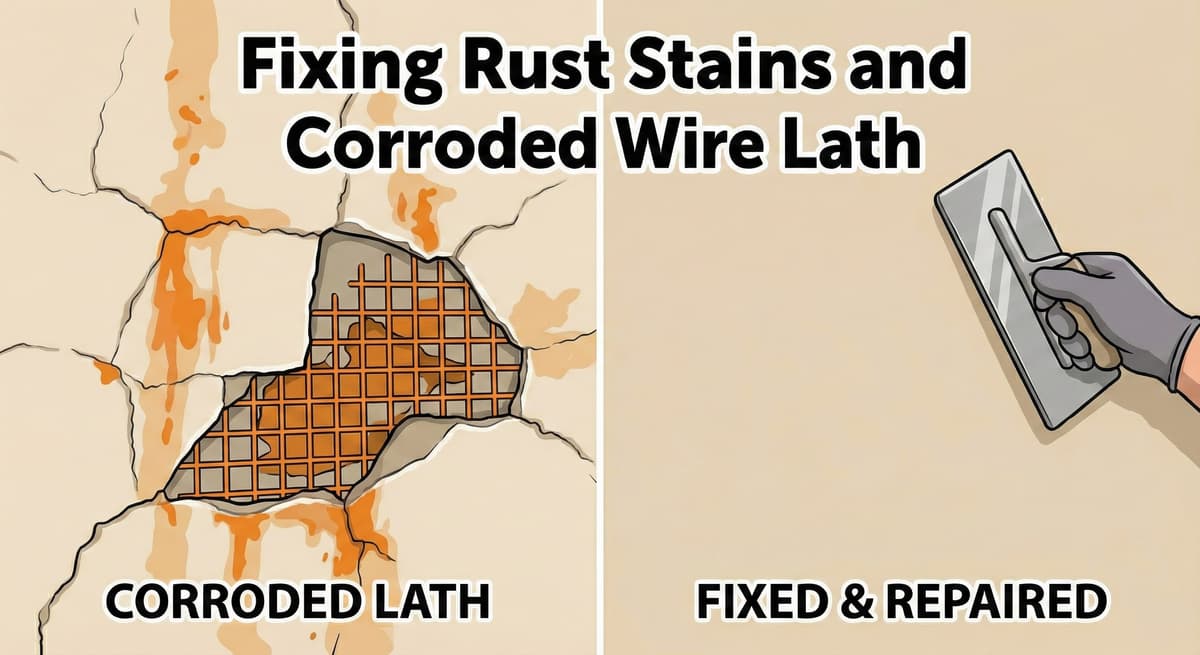
- Rust Jacking: As steel oxidizes, it expands. This expansion can physically crack the surrounding stucco, creating new entry points for water.
- System Failure: If the screed disintegrates, the bottom edge of your stucco loses its mechanical support.
- Trapped Moisture: If the screed is rusted shut, water is backing up into your sheer wall (plywood) and framing, leading to dry rot and mold.
The Repair Process: Doing It Right
Fixing a rusty weep screed is not a DIY project. It requires demolition and precise waterproofing integration to prevent future leaks.
- Demolition and Exposure: We cut the stucco back several inches above the foundation line to expose the framing and the building paper.
- The Paper Connection: This is the most critical step. We cannot simply butt new paper against old paper. We must slide the new Grade D building paper (we prefer two layers of 60-Minute Super Jumbo Tex for durability) under the existing weather-resistive barrier to create a shingle-lap effect. If this lap is done backward, water will run behind the new paper and into your wall.
- Installation of New Screed: We install the new screed (Galvanized or Vinyl) ensuring it is level and allows for proper drainage.
- Lathing: We install new metal lath (referencing ASTM C847), ensuring it overlaps the existing wire mesh properly to prevent cracking at the transition line.
- The Three-Coat Patch: We apply a scratch coat, a brown coat, and finally a finish coat. We match the texture of the surrounding wall—whether it is a smooth Santa Barbara finish or a heavy Sand Finish.
Technical Note on Painting: If you plan to paint over the repair, the pH level of fresh cement must cure (drop below 10) before painting, or you must use a primer designed for "hot" stucco.
When To Call a Professional
If the rust is minor and surface-level, you may be able to wire-brush it and paint it with a rust-inhibiting metal paint. However, if the metal is perforated, crumbling, or if the screed is buried below grade, you need a professional remediation.
Attempting to replace weep screed without understanding lapping sequences for building paper is the fastest way to cause a major leak in your home.
Recommended Reading for Homeowners
- Guide to Stucco Weep Screed Building Codes
- Understanding Weep Screed Holes: Essential for Water Management
- Stucco Rusty Weep Screed Replacement Services
—
Ready to Work With a Trusted Stucco Contractor in Los Angeles? Contact Stucco Champions today for a free consultation! Visit us at Stucco Champions for valuable resources and to learn more about our expert stucco repair service
Frequently Asked Questions About Stucco
How much does stucco repair cost in Orange County and Los Angeles?+
Stucco repair typically ranges from $500 for minor crack patching to $5,000+ for full re-stucco of a single elevation. The exact cost depends on the damage type (hairline cracks, water damage, delamination, weep screed failure), the square footage involved, and whether the original three-coat or one-coat stucco system needs to be matched. Stucco Champions provides fixed-price written estimates after a free on-site assessment — no hourly billing, no surprise change orders. See our stucco repair cost guide for detailed pricing by repair type.
How long does stucco last in Southern California?+
Properly installed three-coat stucco lasts 50-80+ years in Southern California's climate. The most common failure points aren't the stucco itself — they're the supporting components: corroded weep screed, deteriorated building paper behind the stucco, and improperly sealed window flashing. Most "stucco failures" are actually moisture-intrusion failures that start at one of these points. Annual visual inspection catches problems before they spread, which is why we offer free weep screed assessments for homeowners in our service area.
Can I repair stucco myself, or do I need a contractor?+
Hairline cracks under 1/8 inch wide can be sealed with elastomeric caulk by a homeowner. Anything larger — pattern cracks, delamination (where stucco pulls away from the wall), water-damaged areas, or chimney/window leak repairs — requires a licensed contractor. Improper DIY repair on these is the #1 cause of repeat failures because the underlying cause (usually moisture) isn't addressed. California's CSLB requires a license for any stucco work over $500. We're a CSLB-licensed and insured contractor — see our contractor team for credentials.
How do I know if I need stucco repair vs. full re-stucco?+
If less than 30% of an elevation has visible damage, repair is the right call. If you see large areas of cracking, multiple zones of delamination, or the underlying paper and lath have rotted across an entire wall, full re-stucco of that elevation is more cost-effective long-term. Our free assessment includes a moisture survey and lath inspection so you get a defensible recommendation either way — not just a quote pushing whichever option costs more.
Do you offer warranties on stucco work?+
Yes. Stucco Champions provides a written 5-year workmanship warranty on all stucco repairs and a 10-year warranty on full re-stucco. We're a CSLB-licensed and insured contractor (license #1122006 — verifiable at cslb.ca.gov), which means our work is backed by California's contractor licensing board, not just our own promise. Request a free estimate to see the warranty terms in writing before you sign anything.
How long does a stucco repair take?+
Most patch repairs are completed in 1-2 days, including a 24-hour cure time before texture matching and color application. Full re-stucco of a single elevation runs 5-7 working days because each coat (scratch, brown, finish) needs to cure properly before the next is applied. We schedule around weather — California stucco needs daytime temperatures above 50°F with no rain forecast for at least 24 hours after each coat. Our crew shows up on time, every time.