The Comprehensive Guide to Stucco Lathing Wire Types
Written by Stucco Champions — Southern California’s Authority on Exterior Plastering.
The Comprehensive Guide to Stucco Lathing Wire Types
Stucco lathing is the hidden backbone of your home’s exterior. While the finish coat gets all the aesthetic glory, the wire lath underneath is doing the heavy lifting—literally holding thousands of pounds of cement to the wall. Choosing the wrong gauge or profile can lead to sagging, cracking, and catastrophic delamination.
In Southern California, we primarily deal with two systems: Three-Coat and One-Coat. Each requires a specific type of wire to meet code. This guide breaks down the metal mesh options available and when to use them.
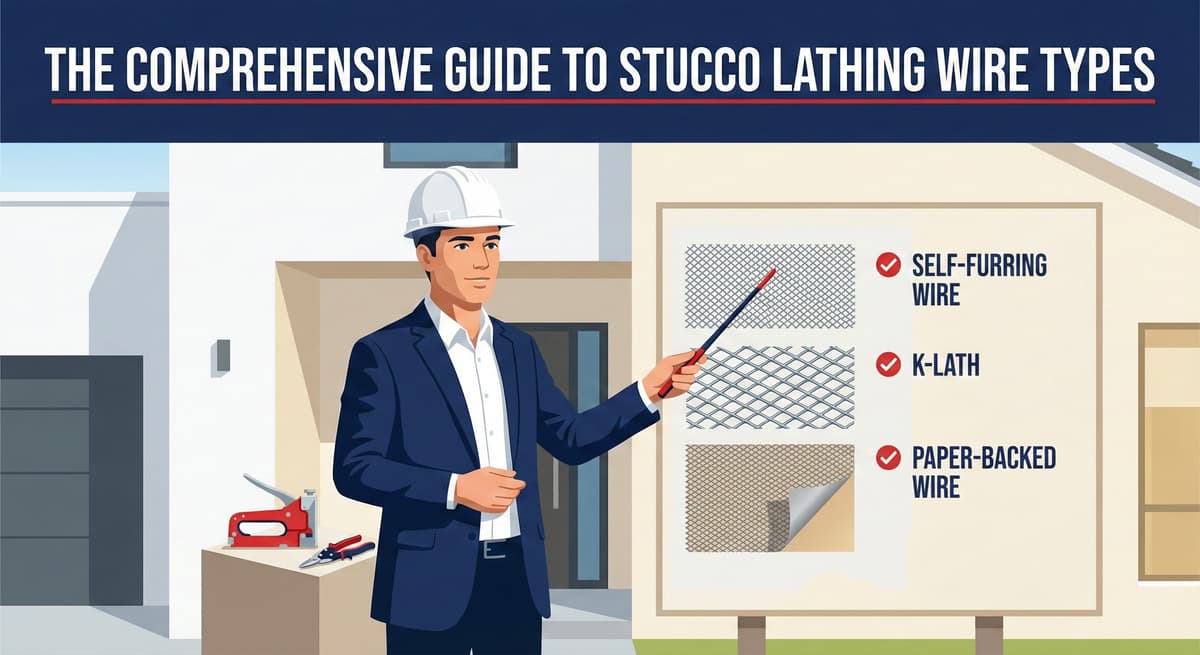
1. The Heavyweight: 17-Gauge Woven Wire
This is the industry standard for Traditional Three-Coat Stucco. It looks like heavy-duty chicken wire.
- Strength: 17-gauge steel is thick enough to support the full weight of a 7/8" cement wall (approx 10-12 lbs/sq ft).
- Self-Furring: It is "crimped" (bent) during manufacturing to hold the wire 1/4 inch away from the wall. This allows the scratch coat to flow behind the wire, fully embedding it in cement. If you use flat wire, the cement won't key in, and the wall will fail.
- Application: Residential exterior walls over plywood sheathing.
Free Assessment
Noticing Stucco Damage?
Get a free on-site assessment from a licensed contractor. $0 deposit, no obligation.
GET FREE ASSESSMENT2. The Lightweight: 20-Gauge Woven Wire
This is a thinner, more flexible version of the 17-gauge wire.
- Use Case: Specifically designed for One-Coat Stucco Systems over foam. Because one-coat stucco is lighter (fiber-reinforced) and thinner (3/8"), it doesn't require the heavy steel support of the 17-gauge.
- Cost: slightly cheaper and easier to cut, but do not use this for a heavy three-coat system; it will sag.
3. Expanded Metal Lath (The Diamond Mesh)
This looks like a steel sheet with diamond-shaped holes punched into it. It is rigid and sharp.
When to Use It- Stone Veneer: It provides a stronger grip for heavy stone.
- Transitions: We use strips of this to reinforce corners or connect different materials (e.g., wood to stucco).
- Soffits/Ceilings: Because it is rigid, it doesn't sag when applying stucco overhead.
4. High-Rib Lath: The Ceiling Specialist
This is expanded metal lath with deep V-grooves (ribs) running through it for extra stiffness.
- Application: Exclusively for Ceilings and Soffits. The ribs prevent the wet cement from bowing the lath downward while it cures. It spans joists without sagging.
- Warning: It is extremely hard to cut. You need a grinder or heavy-duty snips.
5. Paper-Backed Wire (K-Lath)
This is wire mesh with the building paper already attached to the back.
Pros: Faster installation (one step).
Cons: Harder to ensure a proper "shingle lap" at the seams. We generally prefer installing paper and wire separately to guarantee the waterproofing layer is perfect, but K-Lath is common in tract home construction.
Regardless of the wire type, the laps are critical.
Horizontal Laps: Minimum 1 inch.
Vertical Laps: Minimum 2 inches.
Wire-tie the laps together between studs. If the wire isn't continuous, the stucco will crack in a straight line right at the seam.
Conclusion: Match the Wire to the System
Don't mix and match. If you are doing a heavy custom home finish, use 17-gauge. If you are doing a lightweight retrofit, use 20-gauge. And if you are hanging stone or stuccoing a ceiling, switch to expanded metal. The wire is the skeleton; make sure it's strong enough to hold the skin.
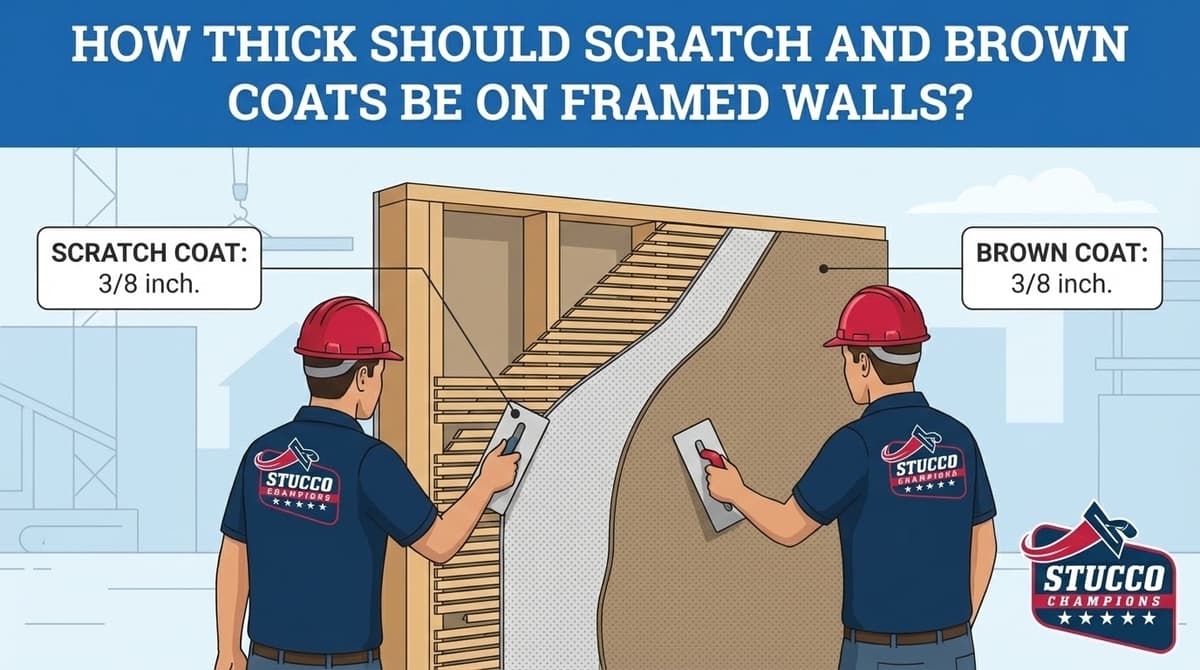
Related ResourcesLast week, we shared Stucco Scratch Coat vs. Brown Coat. Once the wire is up, learn how to apply the base coats.
Planning a Stucco Project?
Get a quick cost estimate for your project — and see if we serve your area.
Frequently Asked Questions About Stucco
How much does stucco repair cost in Orange County and Los Angeles?+
Stucco repair typically ranges from $500 for minor crack patching to $5,000+ for full re-stucco of a single elevation. The exact cost depends on the damage type (hairline cracks, water damage, delamination, weep screed failure), the square footage involved, and whether the original three-coat or one-coat stucco system needs to be matched. Stucco Champions provides fixed-price written estimates after a free on-site assessment — no hourly billing, no surprise change orders. See our stucco repair cost guide for detailed pricing by repair type.
How long does stucco last in Southern California?+
Properly installed three-coat stucco lasts 50-80+ years in Southern California's climate. The most common failure points aren't the stucco itself — they're the supporting components: corroded weep screed, deteriorated building paper behind the stucco, and improperly sealed window flashing. Most "stucco failures" are actually moisture-intrusion failures that start at one of these points. Annual visual inspection catches problems before they spread, which is why we offer free weep screed assessments for homeowners in our service area.
Can I repair stucco myself, or do I need a contractor?+
Hairline cracks under 1/8 inch wide can be sealed with elastomeric caulk by a homeowner. Anything larger — pattern cracks, delamination (where stucco pulls away from the wall), water-damaged areas, or chimney/window leak repairs — requires a licensed contractor. Improper DIY repair on these is the #1 cause of repeat failures because the underlying cause (usually moisture) isn't addressed. California's CSLB requires a license for any stucco work over $500. We're a CSLB-licensed and insured contractor — see our contractor team for credentials.
How do I know if I need stucco repair vs. full re-stucco?+
If less than 30% of an elevation has visible damage, repair is the right call. If you see large areas of cracking, multiple zones of delamination, or the underlying paper and lath have rotted across an entire wall, full re-stucco of that elevation is more cost-effective long-term. Our free assessment includes a moisture survey and lath inspection so you get a defensible recommendation either way — not just a quote pushing whichever option costs more.
Do you offer warranties on stucco work?+
Yes. Stucco Champions provides a written 5-year workmanship warranty on all stucco repairs and a 10-year warranty on full re-stucco. We're a CSLB-licensed and insured contractor (license #1122006 — verifiable at cslb.ca.gov), which means our work is backed by California's contractor licensing board, not just our own promise. Request a free estimate to see the warranty terms in writing before you sign anything.
How long does a stucco repair take?+
Most patch repairs are completed in 1-2 days, including a 24-hour cure time before texture matching and color application. Full re-stucco of a single elevation runs 5-7 working days because each coat (scratch, brown, finish) needs to cure properly before the next is applied. We schedule around weather — California stucco needs daytime temperatures above 50°F with no rain forecast for at least 24 hours after each coat. Our crew shows up on time, every time.