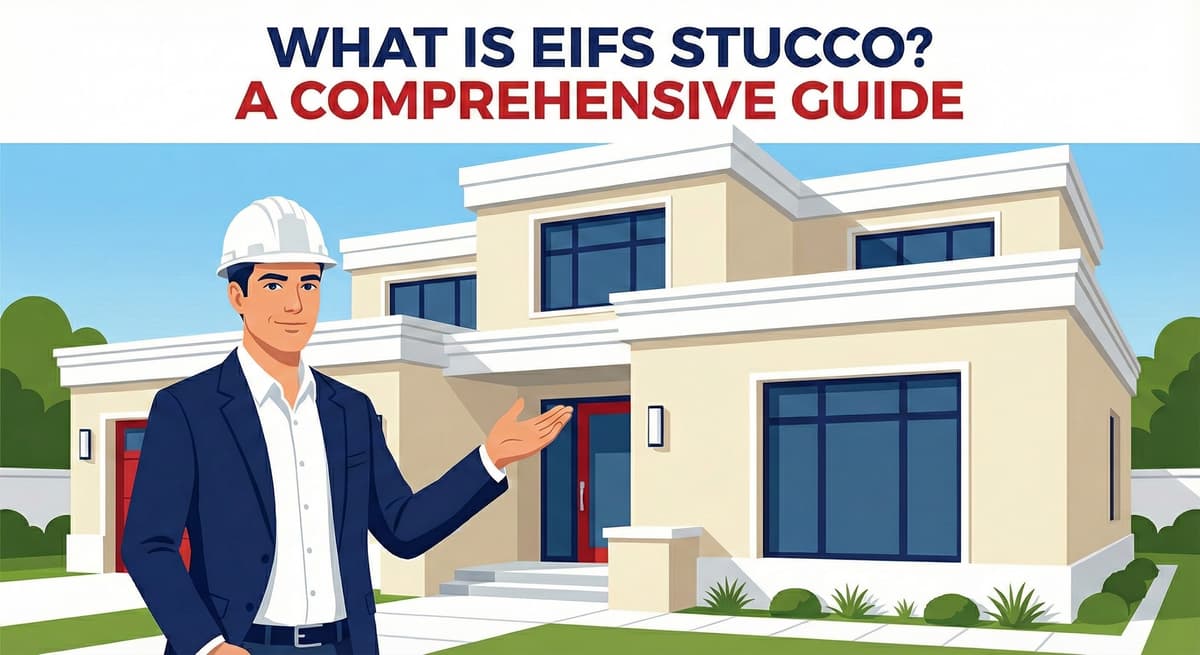
What Is EIFS Stucco? A Comprehensive Guide
Written by Stucco Champions — Southern California’s Authority on Exterior Plastering.
What Is EIFS Stucco? A Comprehensive Technical Guide
In the world of exterior cladding, EIFS (Exterior Insulation and Finish System) is often referred to as "Synthetic Stucco." While it looks identical to traditional stucco from the curb, it is a completely different engineering marvel.
Traditional stucco relies on mass (thick cement) to protect the home. EIFS relies on layers (insulation, mesh, and acrylic) to create a thermally efficient, flexible envelope. This guide breaks down the anatomy of EIFS and why it is the preferred choice for modern energy-efficient homes in Southern California.
1. The Anatomy of EIFS: It’s Not Just "Styrofoam"
EIFS is a multi-layered system. Each component serves a specific function in managing water and thermal transfer.
Free Assessment
Noticing Stucco Damage?
Get a free on-site assessment from a licensed contractor. $0 deposit, no obligation.
GET FREE ASSESSMENTLayer 1: The Water-Resistive Barrier (WRB)
The Foundation: Before anything is attached, the plywood sheathing is coated with a liquid-applied membrane.
Function: This rubberized coating seals every nail hole and seam in the plywood, creating an air and water barrier that traditional building paper cannot match.
Layer 2: The Insulation Board
The Core: Expanded Polystyrene (EPS) foam boards are adhered to the wall using a polymer-modified adhesive.
Function: This provides "Continuous Insulation" (CI), wrapping the home in a thermal blanket that eliminates heat transfer through wood studs (thermal bridging).
Layer 3: Base Coat & Mesh
The Armor: A fiberglass mesh grid is embedded into a wet cementitious base coat over the foam.
Function: This creates a hard, impact-resistant shell. Standard mesh protects against hail; "High-Impact" mesh protects against baseballs and shopping carts.
Layer 4: The Finish Coat
The Skin: A textured 100% acrylic polymer coating.
Function: It provides the color and texture. Because it is synthetic, it is flexible (resists cracking) and color-fast (resists fading).
2. Barrier EIFS vs. Drainage EIFS
This is the most critical distinction in the industry.
- Barrier EIFS (Old School): Relys on a perfect seal on the outside. If water gets in, it cannot get out. This led to the "EIFS Rot" lawsuits of the 1990s.
- Drainage EIFS (Modern Standard): The foam boards have vertical grooves on the back. If water penetrates the sealant, gravity pulls it down the grooves to a weep screed at the bottom. Stucco Champions only installs Drainage EIFS.
3. EIFS vs. Traditional Stucco: Which is Better?
It depends on your goal.
Choose EIFS If:
- Energy Efficiency: You want to lower AC bills (High R-Value).
- Design Flexibility: You want complex shapes, cornices, or arches (foam is easy to cut).
- Crack Resistance: You want a finish that won't hairline crack.
Choose Traditional Stucco If:
- Impact Resistance: You need a rock-hard wall that can take a beating.
- Fire Resistance: You need a 1-hour fire rating (EIFS requires special assemblies for fire).
- Breathability: You prefer a permeable system that "breathes" naturally.
⚠️ Maintenance Warning
EIFS is a "surface sealed" system. This means the caulking around windows and doors is critical. If the sealant fails, water enters the system. EIFS requires regular sealant inspections every 3-5 years to remain watertight.
4. Manufacturer Systems
Unlike traditional stucco which is mixed on-site, EIFS is a proprietary system. Brands like Dryvit, Sto, and Parex manufacture all the components to work together chemically. We do not mix brands; we follow the manufacturer's warranty specifications strictly.
Conclusion: The Modern Envelope
EIFS is the future of energy-efficient construction. When installed with a proper drainage plane, it outperforms traditional stucco in thermal value and flexibility. However, it requires specialized application. Do not hire a general plasterer for EIFS; hire a certified applicator.
Related Resources
Last week, we shared The Comprehensive Guide to Stucco Fasteners. EIFS uses adhesive, but sometimes mechanical fasteners are required.
Frequently Asked Questions About Stucco
How much does stucco repair cost in Orange County and Los Angeles?+
Stucco repair typically ranges from $500 for minor crack patching to $5,000+ for full re-stucco of a single elevation. The exact cost depends on the damage type (hairline cracks, water damage, delamination, weep screed failure), the square footage involved, and whether the original three-coat or one-coat stucco system needs to be matched. Stucco Champions provides fixed-price written estimates after a free on-site assessment — no hourly billing, no surprise change orders. See our stucco repair cost guide for detailed pricing by repair type.
How long does stucco last in Southern California?+
Properly installed three-coat stucco lasts 50-80+ years in Southern California's climate. The most common failure points aren't the stucco itself — they're the supporting components: corroded weep screed, deteriorated building paper behind the stucco, and improperly sealed window flashing. Most "stucco failures" are actually moisture-intrusion failures that start at one of these points. Annual visual inspection catches problems before they spread, which is why we offer free weep screed assessments for homeowners in our service area.
Can I repair stucco myself, or do I need a contractor?+
Hairline cracks under 1/8 inch wide can be sealed with elastomeric caulk by a homeowner. Anything larger — pattern cracks, delamination (where stucco pulls away from the wall), water-damaged areas, or chimney/window leak repairs — requires a licensed contractor. Improper DIY repair on these is the #1 cause of repeat failures because the underlying cause (usually moisture) isn't addressed. California's CSLB requires a license for any stucco work over $500. We're a CSLB-licensed and insured contractor — see our contractor team for credentials.
How do I know if I need stucco repair vs. full re-stucco?+
If less than 30% of an elevation has visible damage, repair is the right call. If you see large areas of cracking, multiple zones of delamination, or the underlying paper and lath have rotted across an entire wall, full re-stucco of that elevation is more cost-effective long-term. Our free assessment includes a moisture survey and lath inspection so you get a defensible recommendation either way — not just a quote pushing whichever option costs more.
Do you offer warranties on stucco work?+
Yes. Stucco Champions provides a written 5-year workmanship warranty on all stucco repairs and a 10-year warranty on full re-stucco. We're a CSLB-licensed and insured contractor (license #1122006 — verifiable at cslb.ca.gov), which means our work is backed by California's contractor licensing board, not just our own promise. Request a free estimate to see the warranty terms in writing before you sign anything.
How long does a stucco repair take?+
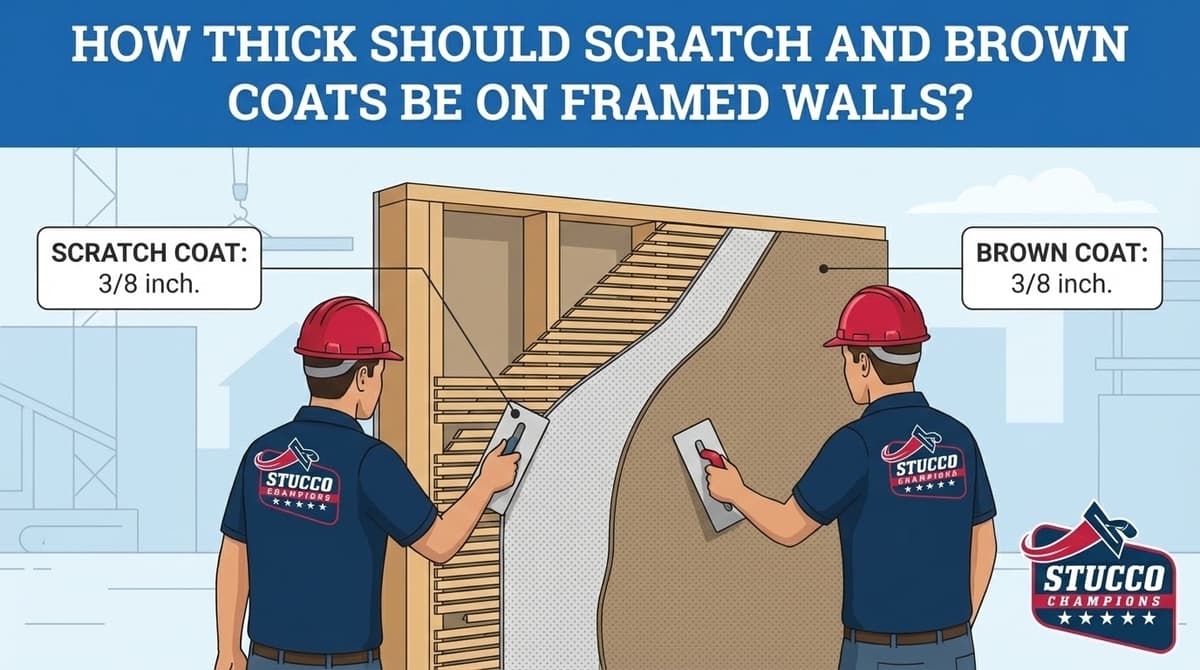
Most patch repairs are completed in 1-2 days, including a 24-hour cure time before texture matching and color application. Full re-stucco of a single elevation runs 5-7 working days because each coat (scratch, brown, finish) needs to cure properly before the next is applied. We schedule around weather — California stucco needs daytime temperatures above 50°F with no rain forecast for at least 24 hours after each coat. Our crew shows up on time, every time.