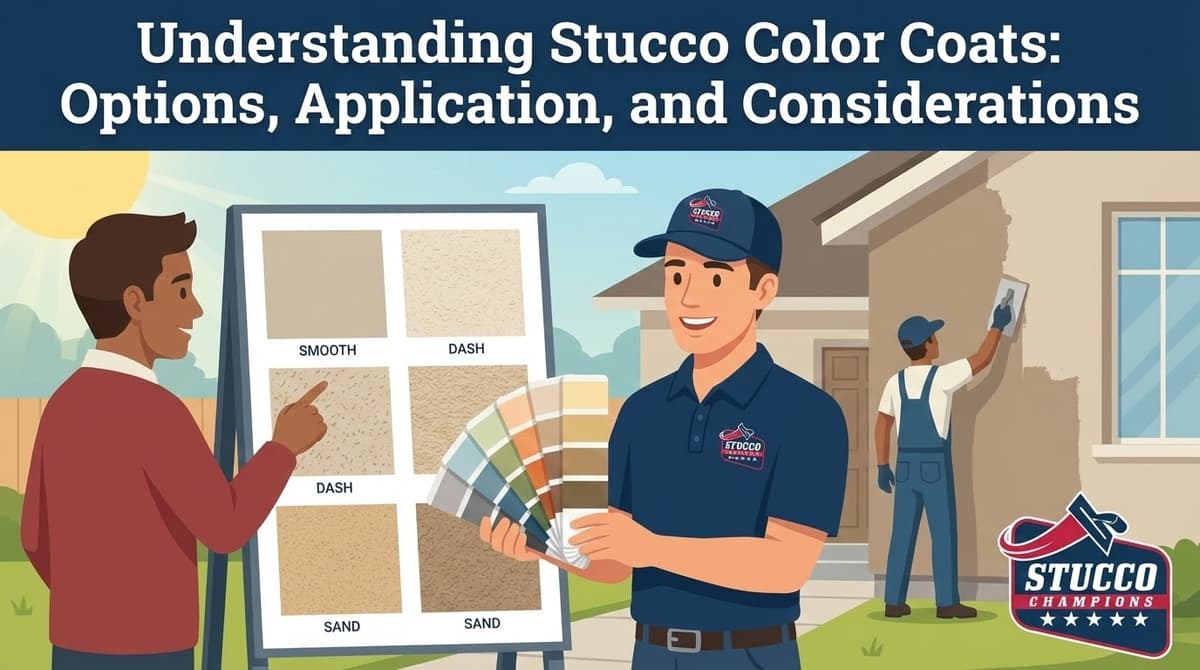
Exploring Stucco Color Coats: Options, Application, & Considerations
The Final Layer: A Homeowner’s Guide to Stucco Color Coats
Written by Stucco Champions — Southern California’s Authority on Exterior Plastering.
When you look at a stucco home, you aren't seeing the grey structural cement; you are seeing the Color Coat (technically known as the Finish Coat).
This final layer, typically only 1/16" to 1/8" thick, does the heavy lifting for your home’s curb appeal. But more than just aesthetics, it acts as the primary shield against Southern California’s intense UV radiation and moisture.
As professional plasterers, we often see homeowners confused by the options. Should you choose traditional cement or modern acrylic? Here is the technical breakdown to help you decide.
Free Assessment
Noticing Stucco Damage?
Get a free on-site assessment from a licensed contractor. $0 deposit, no obligation.
GET FREE ASSESSMENTWhat is a "Color Coat"?
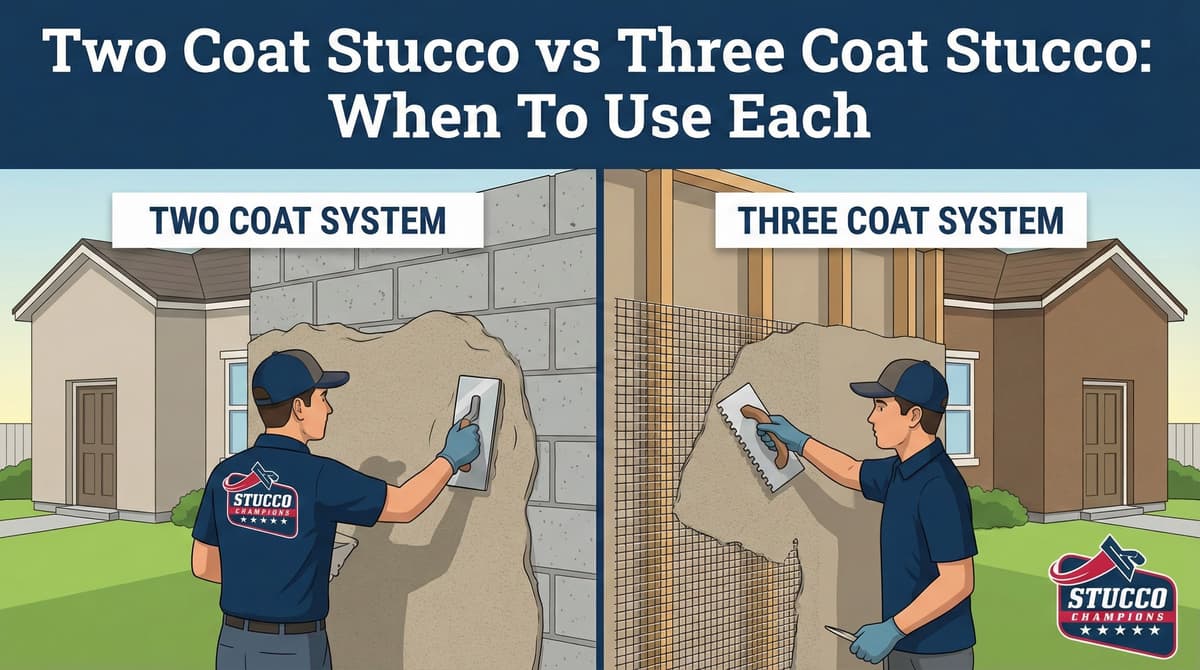
In the Three-Coat System (defined by ASTM C926), the first two coats provide the strength and flatness. The third coat—the Color Coat—provides the texture and the hue.
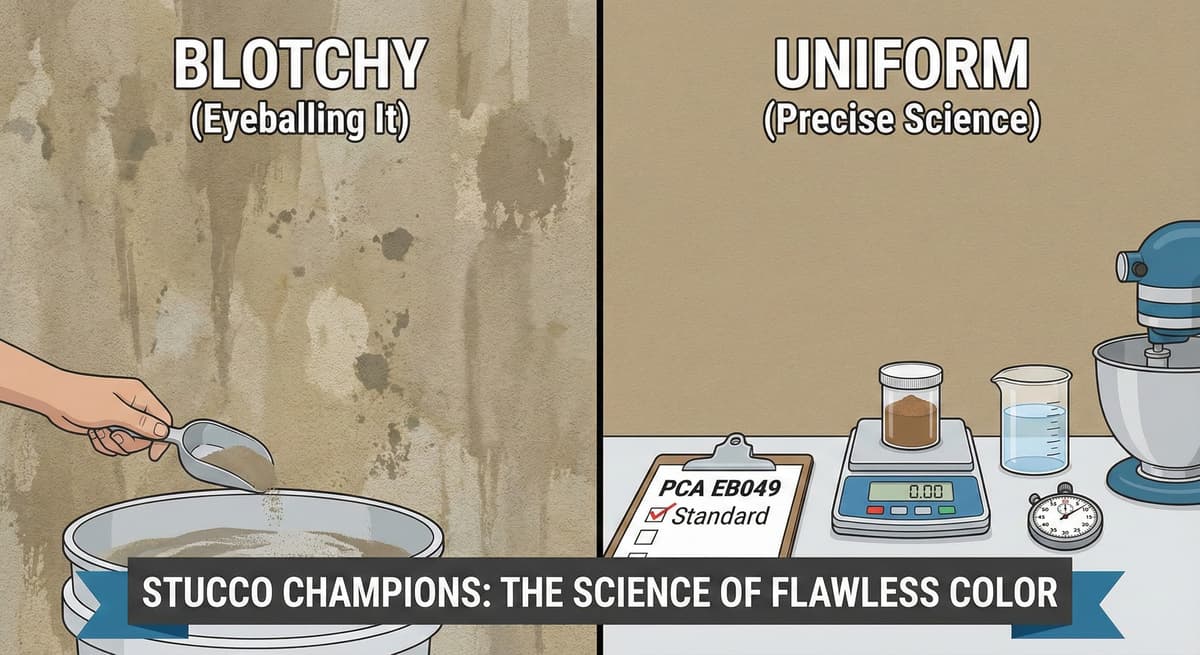
The Stucco Champions Philosophy: We believe in Integral Color. This means the pigment is mixed directly into the material before it is applied.
-
Benefit: Unlike paint, which sits on top and peels, integral color is the wall. If you chip it, the color remains underneath.
-
Result: A maintenance-free finish that allows the wall to "breathe" (release moisture vapor), preventing dry rot.
Material Choices: Cement vs. Acrylic
1. Traditional Cementitious Finish (The Classic)
-
Composition: White Portland cement (ASTM C150), lime, silica sand, and mineral oxide pigments.
-
The Look: This provides the authentic, Old World look found on Spanish Colonial and Mediterranean homes in Mission Viejo and San Clemente. It has a natural "mottled" or cloudy appearance that varies with humidity.
-
Best For:
-
Earth Tones: Beiges, creams, and whites.
-
Breathability: It is the most vapor-permeable option.
-
Maintenance: Can be refreshed efficiently with a Fog Coat (a cement stain) years down the road.
-
2. Acrylic Finish (The "Synthetic" Option)
-
Composition: Acrylic polymer resins mixed with crushed quartz aggregate. It comes wet in a bucket (like paint, but thicker) rather than dry in a bag.
-
The Look: Uniform, consistent color with no mottling. It feels slightly "rubbery" to the touch.
-
Best For:
-
Dark/Rich Colors: Because acrylic encapsulates the pigment, it resists fading. If you want a dark grey, navy blue, or deep red house, you must use acrylic to avoid discoloration.
-
Flexibility: The polymers allow the finish to stretch slightly, bridging hairline cracks better than rigid cement.
-
Water Resistance: It sheds water efficiently, making it ideal for coastal properties exposed to salt mist.
-
Climate and Aesthetic Considerations
Your location in Southern California should dictate your material choice.
-
Coastal Zones (Newport Beach/Laguna): We often recommend Acrylic finishes. The salt air eats away at cement, but acrylic provides a hydrophobic shield.
-
Inland Valleys: Traditional Cement is often preferred for its breathability and thermal mass properties, fitting the historic aesthetic of the region.
The Investment: Value Over Cost
While we cannot give a flat price tag due to variables like scaffolding and prep work, understanding the Return on Investment (ROI) is key.
-
Acrylic Finishes: Typically represent a higher upfront investment due to the cost of the polymers. However, they eliminate the need for painting and hold their color for decades.
-
Cement Finishes: Generally lower in material cost, offering a classic look that adds significant value to period-specific architecture.
Maintenance: How to Care for Your Color Coat
-
Cement: Over time, cement is porous and can hold dirt. It cleans up well with a gentle hose-down. If color fades after 15 years, a Fog Coat restores it without sealing the pores.
-
Acrylic: Highly stain-resistant. Usually, a simple "soft wash" with mild detergent keeps it looking brand new.
Conclusion
Your stucco color coat is the face of your home. Whether you choose the breathable, mottled charm of traditional cement or the flexible, color-fast performance of acrylic, the most important factor is the application.
At Stucco Champions, we follow strict manufacturer mixing guidelines to ensure your color coat doesn't just look good on day one, but stands up to the California sun for years to come.
—