
Understanding Caulking Choices for Stucco
Written by Stucco Champions — Southern California’s Authority on Exterior Plastering.
Understanding Caulking Choices for Stucco: A Chemical Guide
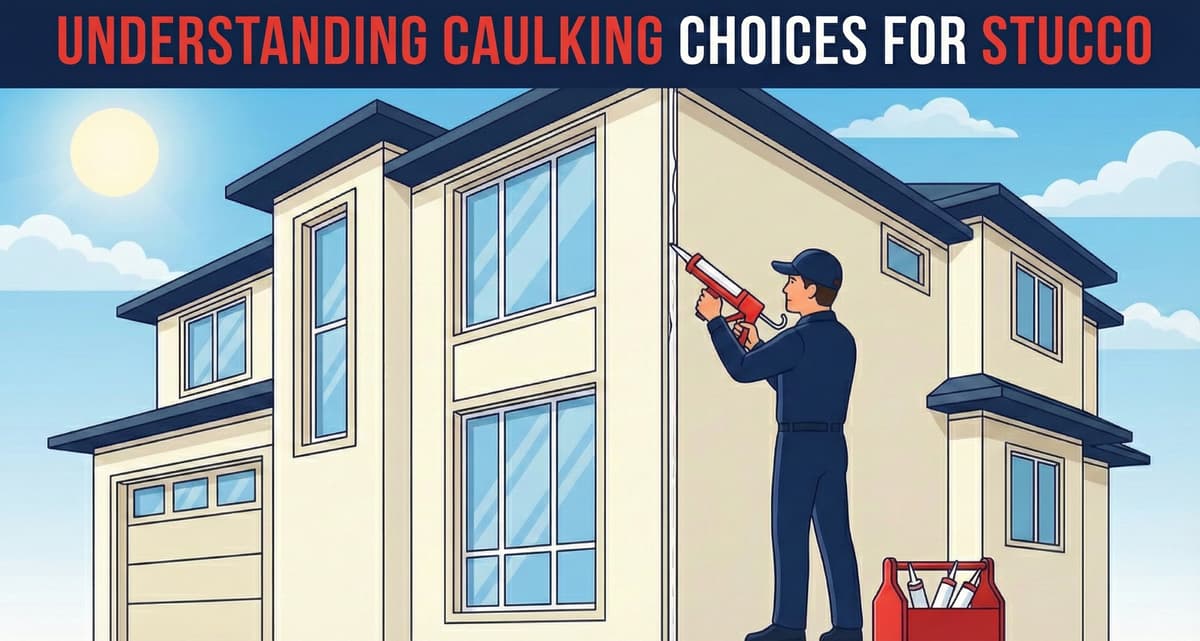
In stucco repair, caulk is not just a "gap filler"—it is an expansion joint. Stucco is rigid, but the wood framing underneath moves with the weather. If your sealant doesn't stretch, it tears, and water enters the wall.
Walking down the aisle at the hardware store can be overwhelming. Do you grab Silicone? Acrylic? Polyurethane? Picking the wrong tube can ruin your paint job and your waterproofing. This guide breaks down the three chemical families of sealant you need to know.
1. Polyurethane: The Structural Waterproofer
Best For: Where stucco meets other materials (Windows, Door Frames, Wood Trim).
Polyurethane is the heavy-duty standard for professional waterproofing. It is incredibly sticky, adheres aggressively to masonry, and remains flexible for decades.
- The Pro: Creates a permanent, watertight seal that will not shrink.
- The Con: Difficult to tool (sticky/messy) and requires 4-7 days to fully cure before painting.
- Trusted Product: Sikaflex Construction Sealant.
Free Assessment
Noticing Stucco Damage?
Get a free on-site assessment from a licensed contractor. $0 deposit, no obligation.
GET FREE ASSESSMENT2. Elastomeric Acrylic: The Cosmetic Repair
Best For: Hairline cracks in the middle of a wall.
Standard "Painter's Caulk" often fails on stucco because it dries to a shiny, smooth line that stands out against the rough texture. You need a Textured Elastomeric sealant. These contain aggregate (sand) to match the stucco look.
- The Pro: Blends visually with the stucco texture. Water clean-up. Paintable in 2-4 hours.
- The Con: Not as waterproof as polyurethane; better for surface aesthetics than deep structural sealing.
- Trusted Product: Mor-Flexx (Sashco) or Quikrete Stucco Repair.
3. The "Forbidden" Material: 100% Silicone
⚠️ NEVER Use Silicone on StuccoYou might be tempted to use Silicone because it is waterproof. Do not do it.
Nothing sticks to silicone—not even paint or new stucco. If you apply silicone to a crack, you can never paint that spot again. The paint will "fish-eye" and separate. To fix it, we have to physically grind the silicone out of the wall.
Don't guess at the hardware store. Get our Waterproofing Checklist & Product Guide sent to your inbox.
4. Application: The "Concave" Rule
When applying sealant between stucco and a window frame, do not leave a flat or bulging bead. You must tool it (smooth it) into a concave shape (curved inward). This allows the caulk to stretch like a rubber band when the materials expand and contract.
5. The Backer Rod Mandate
If the gap is deeper than 1/2 inch, you cannot just fill it with caulk. It will sag and fail.
The Fix: Insert a Foam Backer Rod first. This provides a backing for the caulk to sit against and ensures the caulk adheres only to the sides (2-point adhesion), allowing for maximum flexibility.
Summary: Which Tube Do I Grab?
Quick Reference- Window/Door Perimeters: Polyurethane (Sikaflex)
- Expansion Joints: Polyurethane (Sikaflex 1A)
- Hairline Cracks (Surface): Textured Acrylic (Mor-Flexx)
- Wood-to-Stucco: Hybrid/Polyurethane (DynaFlex)
Conclusion: Chemistry Matters
Choosing the right tube determines if your repair lasts 6 months or 15 years. For heavy waterproofing around windows, stick to Polyurethane. For blending cosmetic cracks, use Textured Acrylic. And remember: keep the Silicone in the bathroom, far away from your stucco.
Related ResourcesLast week, we shared Can You Repaint Painted Stucco?. Once you seal the cracks, learn how to coat the wall properly.
Frequently Asked Questions About Stucco
How much does stucco repair cost in Orange County and Los Angeles?+
Stucco repair typically ranges from $500 for minor crack patching to $5,000+ for full re-stucco of a single elevation. The exact cost depends on the damage type (hairline cracks, water damage, delamination, weep screed failure), the square footage involved, and whether the original three-coat or one-coat stucco system needs to be matched. Stucco Champions provides fixed-price written estimates after a free on-site assessment — no hourly billing, no surprise change orders. See our stucco repair cost guide for detailed pricing by repair type.
How long does stucco last in Southern California?+
Properly installed three-coat stucco lasts 50-80+ years in Southern California's climate. The most common failure points aren't the stucco itself — they're the supporting components: corroded weep screed, deteriorated building paper behind the stucco, and improperly sealed window flashing. Most "stucco failures" are actually moisture-intrusion failures that start at one of these points. Annual visual inspection catches problems before they spread, which is why we offer free weep screed assessments for homeowners in our service area.
Can I repair stucco myself, or do I need a contractor?+
Hairline cracks under 1/8 inch wide can be sealed with elastomeric caulk by a homeowner. Anything larger — pattern cracks, delamination (where stucco pulls away from the wall), water-damaged areas, or chimney/window leak repairs — requires a licensed contractor. Improper DIY repair on these is the #1 cause of repeat failures because the underlying cause (usually moisture) isn't addressed. California's CSLB requires a license for any stucco work over $500. We're a CSLB-licensed and insured contractor — see our contractor team for credentials.
How do I know if I need stucco repair vs. full re-stucco?+
If less than 30% of an elevation has visible damage, repair is the right call. If you see large areas of cracking, multiple zones of delamination, or the underlying paper and lath have rotted across an entire wall, full re-stucco of that elevation is more cost-effective long-term. Our free assessment includes a moisture survey and lath inspection so you get a defensible recommendation either way — not just a quote pushing whichever option costs more.
Do you offer warranties on stucco work?+
Yes. Stucco Champions provides a written 5-year workmanship warranty on all stucco repairs and a 10-year warranty on full re-stucco. We're a CSLB-licensed and insured contractor (license #1122006 — verifiable at cslb.ca.gov), which means our work is backed by California's contractor licensing board, not just our own promise. Request a free estimate to see the warranty terms in writing before you sign anything.
How long does a stucco repair take?+
Most patch repairs are completed in 1-2 days, including a 24-hour cure time before texture matching and color application. Full re-stucco of a single elevation runs 5-7 working days because each coat (scratch, brown, finish) needs to cure properly before the next is applied. We schedule around weather — California stucco needs daytime temperatures above 50°F with no rain forecast for at least 24 hours after each coat. Our crew shows up on time, every time.