How to Fix a Stucco Window Leak: Step-by-Step Guide 10
Written by Stucco Champions — Southern California’s Authority on Exterior Plastering.
Stucco Window Leak Repair Guide 101: Diagnosis and Solutions
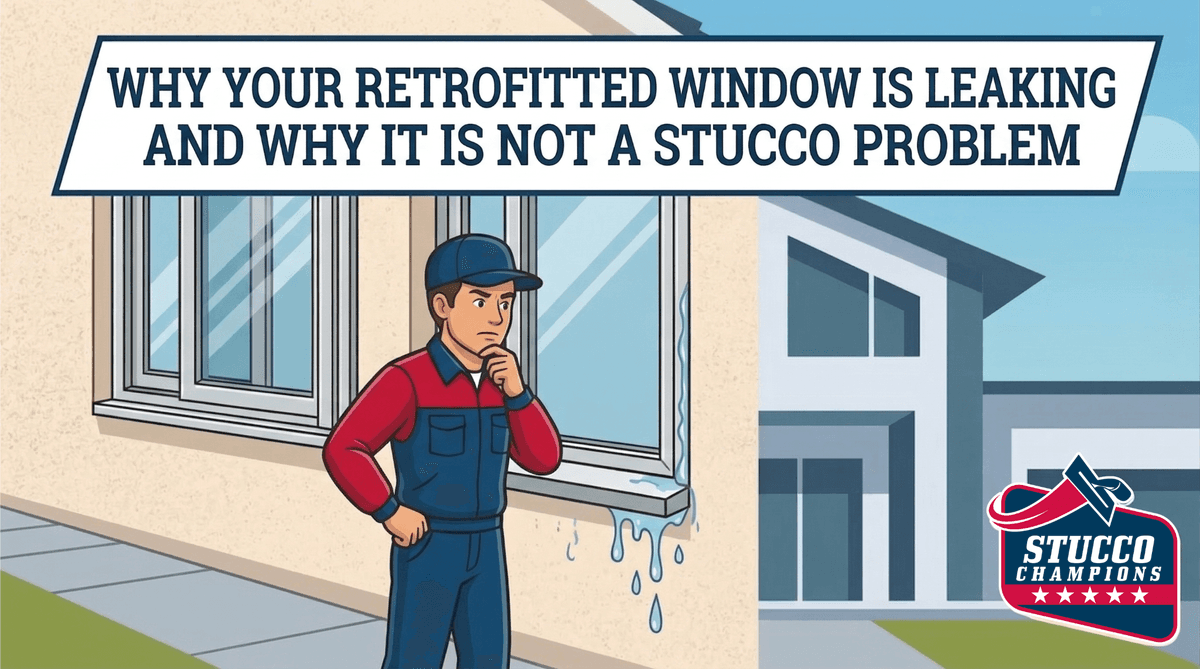
In Southern California, a leaking window is often misdiagnosed as a window failure. Homeowners see water on the sill and assume the glass or the frame is compromised. However, in 90% of cases, the window unit itself is perfectly intact. The failure lies in the integration between the stucco system and the window flashing.
Water intrusion is not a minor annoyance; it is a structural threat. When the drainage plane behind the stucco fails, water bypasses the weather barrier and rots the framing studs. This guide breaks down the forensic process of identifying the leak source and the surgical repair required to fix it.
1. The Diagnostic: Is it the Window or the Wall?
Before we cut into the stucco, we must determine where the water is entering. We use a process of elimination.
Free Assessment
Noticing Stucco Damage?
Get a free on-site assessment from a licensed contractor. $0 deposit, no obligation.
GET FREE ASSESSMENTThe Isolation Test
Step 1: Seal the entire window unit (glass and frame joints) with heavy plastic and waterproof tape.
Step 2: Spray the surrounding stucco wall with a hose for 15 minutes.
Result: If water still appears inside, the leak is in the Stucco System (paper/flashing/cracks), not the window. If it stays dry, the leak is likely in the window glazing or track.
The Interior Inspection
Sometimes we must remove a small section of drywall under the window sill.
Why? To inspect the plywood sheathing. Water stains on the wood framing usually indicate a failure at the top corners (header) of the window flashing.
2. Why Stucco Windows Leak
Stucco is porous; it absorbs water. The system relies on gravity to shed that water. Leaks occur when gravity is interrupted by poor installation practices.
- Reverse Lapping: The most common defect. This happens when the building paper (weather barrier) is tucked behind the bottom window flange instead of over it. This funnels water directly into the wall cavity.
- Missing Z-Bar: The top of the window requires a metal Z-Bar flashing to kick water out. If missing, water rolls behind the frame.
- Deteriorated Paper: Old "10-minute" paper breaks down over decades. We replace it with Two Layers of 60-Minute Grade D Paper to meet current codes.
3. The Repair Protocol: Surgical Remediation
You cannot fix a flashing failure with a caulking gun. Surface caulk is a temporary band-aid. To fix the leak permanently, we must expose the nailing fin.
Step A: Cut-Back
We saw-cut and remove 6 to 9 inches of stucco around the perimeter of the window. This exposes the wood framing and the original building paper.
Step B: Flashing Integration
We install new membrane flashing (like self-adhered flashing tape) around the fins. We then install new Grade D paper, ensuring the proper "shingle lap":
1. Paper goes UNDER the top flange.
2. Paper goes OVER the side flanges.
3. Paper goes UNDER the bottom flange (to let water out).
Step C: Re-Stucco
We install new wire lath, apply a scratch and brown coat, and then texture match the finish to blend with the existing wall.
⚠️ The Caulking TrapNever caulk the bottom flange of a window tight to the stucco. Most vinyl windows have "weep holes" designed to let internal condensation drain out. If you seal the bottom edge with silicone, you trap water inside the frame, which will rot the window itself.
4. Cost Expectations
Because this involves demolition, waterproofing, and skilled finish work, it is more than a handyman job.
| Repair Scope | Estimated Cost | Notes |
|---|---|---|
| Surface Seal (Caulk Only) | $250 - $500 | Temporary fix for minor cracks. Not for flashing leaks. |
| Full Flashing Repair | $800 - $1,800+ | Includes cut-back, new paper, lath, and texture match per window. |
5. Prevention: Annual Maintenance
Once fixed, prevent future leaks by inspecting the sealant joints annually. Look for cracks where the stucco meets the window frame. If the sealant is failing, remove it and replace it with a high-quality Polyurethane Sealant (like Sikaflex), not cheap painter's caulk.
Conclusion: Fix the System
A window leak is a symptom of a broken envelope system. Don't just patch the drywall and paint over the stain. Hire a specialist to open the wall, correct the flashing laps, and ensure your home is watertight for the next rainy season.
Related ResourcesLast week, we shared How to Identify and Repair Stucco Window Leaks. Learn more about diagnostic testing.
Frequently Asked Questions About Stucco
How much does stucco repair cost in Orange County and Los Angeles?+
Stucco repair typically ranges from $500 for minor crack patching to $5,000+ for full re-stucco of a single elevation. The exact cost depends on the damage type (hairline cracks, water damage, delamination, weep screed failure), the square footage involved, and whether the original three-coat or one-coat stucco system needs to be matched. Stucco Champions provides fixed-price written estimates after a free on-site assessment — no hourly billing, no surprise change orders. See our stucco repair cost guide for detailed pricing by repair type.
How long does stucco last in Southern California?+
Properly installed three-coat stucco lasts 50-80+ years in Southern California's climate. The most common failure points aren't the stucco itself — they're the supporting components: corroded weep screed, deteriorated building paper behind the stucco, and improperly sealed window flashing. Most "stucco failures" are actually moisture-intrusion failures that start at one of these points. Annual visual inspection catches problems before they spread, which is why we offer free weep screed assessments for homeowners in our service area.
Can I repair stucco myself, or do I need a contractor?+
Hairline cracks under 1/8 inch wide can be sealed with elastomeric caulk by a homeowner. Anything larger — pattern cracks, delamination (where stucco pulls away from the wall), water-damaged areas, or chimney/window leak repairs — requires a licensed contractor. Improper DIY repair on these is the #1 cause of repeat failures because the underlying cause (usually moisture) isn't addressed. California's CSLB requires a license for any stucco work over $500. We're a CSLB-licensed and insured contractor — see our contractor team for credentials.
How do I know if I need stucco repair vs. full re-stucco?+
If less than 30% of an elevation has visible damage, repair is the right call. If you see large areas of cracking, multiple zones of delamination, or the underlying paper and lath have rotted across an entire wall, full re-stucco of that elevation is more cost-effective long-term. Our free assessment includes a moisture survey and lath inspection so you get a defensible recommendation either way — not just a quote pushing whichever option costs more.
Do you offer warranties on stucco work?+
Yes. Stucco Champions provides a written 5-year workmanship warranty on all stucco repairs and a 10-year warranty on full re-stucco. We're a CSLB-licensed and insured contractor (license #1122006 — verifiable at cslb.ca.gov), which means our work is backed by California's contractor licensing board, not just our own promise. Request a free estimate to see the warranty terms in writing before you sign anything.
How long does a stucco repair take?+
Most patch repairs are completed in 1-2 days, including a 24-hour cure time before texture matching and color application. Full re-stucco of a single elevation runs 5-7 working days because each coat (scratch, brown, finish) needs to cure properly before the next is applied. We schedule around weather — California stucco needs daytime temperatures above 50°F with no rain forecast for at least 24 hours after each coat. Our crew shows up on time, every time.