How to Match an Existing Stucco Color and Finish: Best Guide
Written by Stucco Champions — Southern California’s Authority on Exterior Plastering.
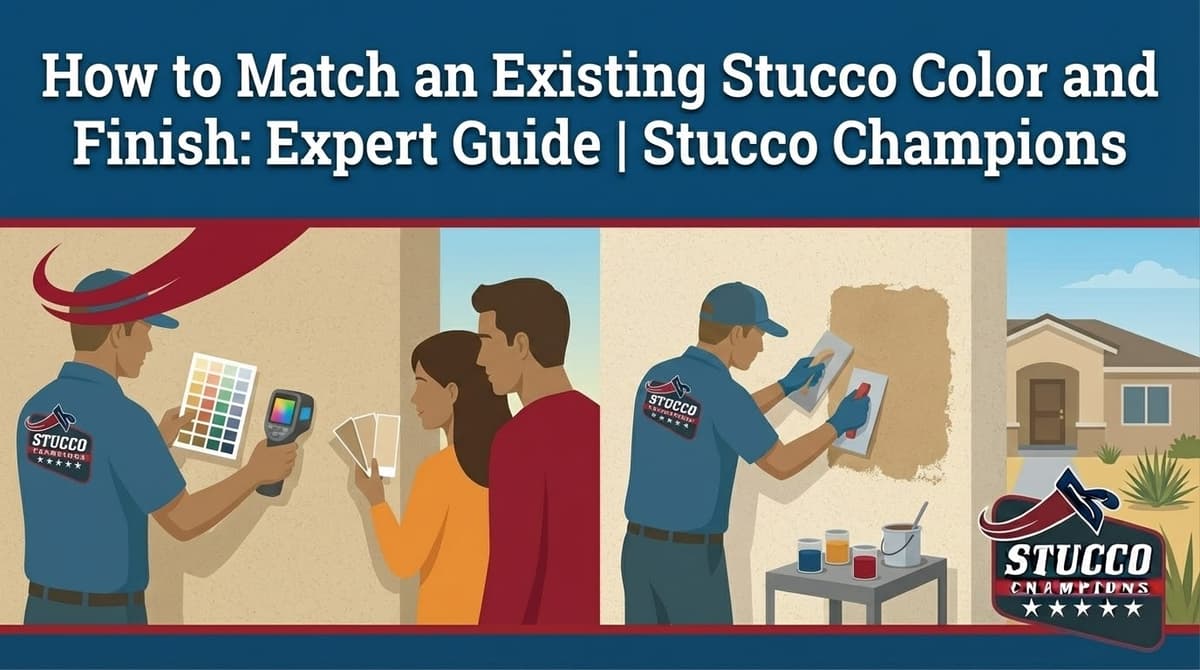
How to Match an Existing Stucco Color and Finish: The Expert Guide
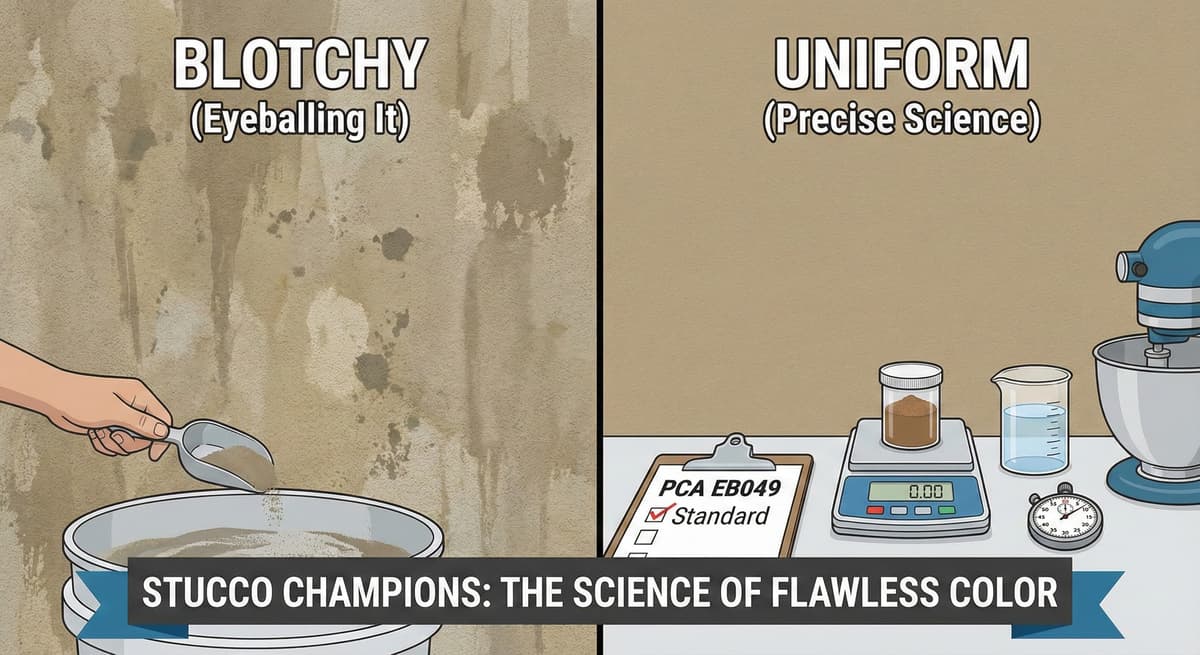
Matching existing stucco is widely considered the most difficult task in exterior construction. Unlike paint, which is a surface coating that can be computer-matched in minutes, stucco is a cement-based product. Its final appearance is dictated by hydration rates, alkalinity, sand aggregate size, and years of UV exposure.
If you are trying to match a discontinued finish—like the old "BMI Cloud White"—or patch a wall that has weathered for a decade, you cannot simply buy a bag off the shelf. This guide explains the forensic process of custom lab matching and texture replication required to achieve an invisible repair.
1. The "Discontinued" Trap: BMI & Sika
Many homeowners waste time searching for specific legacy product names like "BMI Cloud White." However, the industry changes. BMI was acquired by Sika, and formulas change or are dropped entirely.
Even if you found a vintage bag of "Cloud White" from 10 years ago, it would not match your wall today. Your home has been exposed to rain, dirt, and intense Southern California sun, which alters the pigment. You must match the current state of the wall, not the original spec.
Free Assessment
Noticing Stucco Damage?
Get a free on-site assessment from a licensed contractor. $0 deposit, no obligation.
GET FREE ASSESSMENT2. The Solution: Custom Lab Matching
To achieve a seamless repair, we do not guess. We utilize professional lab services from the two industry leaders in the Western United States: LaHabra and Omega.
The Scientific Process
- Harvesting: We chisel a 2" x 3" physical sample from an inconspicuous area of your home (usually near the weep screed).
- Lab Analysis: The sample is sent to the manufacturer's lab, where chemists dissolve the binder to analyze the sand size and pigment load.
- Formulation: They create a custom dry-mix formula to match your specific weathering profile.
3. The Wet Test Warning
Stucco changes color drastically as it cures. This is the moment where most homeowners panic.
⚠️ Wet vs. Dry
Wet Stucco: Appears 3–4 shades darker than the final result.
Dry Stucco: Lightens significantly as the water evaporates (hydration).
Do not judge the color match while the patch is wet. You must allow a minimum of 24 to 48 hours for the alkalinity to balance and the true color to emerge.
4. Texture: The "Shadow Game"
Color is only 50% of the match. The other 50% is how light reflects off the texture. If the texture is wrong, the patch will stand out like a sore thumb.
Identify the Aggregate
If your wall uses a coarse 16/20 mesh sand, but we patch it with a fine 20/30 mesh sand, the patch will look smooth and shiny compared to the rough surrounding wall.
- Fine Aggregate (20/30 Mesh): Used for smooth or subtle "Santa Barbara" finishes.
- Coarse Aggregate (16/20 Mesh): Used for rougher, commercial-style sand finishes.
Match the Tooling
The tool used dictates the finish:
Steel Trowel: Creates a smooth, slick surface (often burns the wall slightly dark).
Green Sponge Float: Brings the sand to the surface for a gritty, open texture.
Plastic Float: Creates the classic "swirl" pattern.
5. The "Hail Mary": Fog Coating
Sometimes, even a perfect lab match is visible because the old wall is dirty while the new patch is pristine. The solution is a Fog Coat.
A Fog Coat is a cement-based colorant sprayed over the wall. Unlike paint, which seals the pores, Fog Coat absorbs into the stucco, keeping it breathable while blending the patch and the existing wall into one uniform color. It is the industry standard for blending repairs.
Conclusion: Expertise Over Guesswork
We don't guess with your home's exterior. By using direct manufacturer relationships with Omega and LaHabra, and employing skilled texture artists, Stucco Champions ensures that your repair blends seamlessly. Don't let a bad patch ruin your curb appeal.
Related Resources
Last week, we shared Fog Coating vs. Painting Stucco. If your color match isn't perfect, this is the solution.
Frequently Asked Questions About Stucco
How much does stucco repair cost in Orange County and Los Angeles?+
Stucco repair typically ranges from $500 for minor crack patching to $5,000+ for full re-stucco of a single elevation. The exact cost depends on the damage type (hairline cracks, water damage, delamination, weep screed failure), the square footage involved, and whether the original three-coat or one-coat stucco system needs to be matched. Stucco Champions provides fixed-price written estimates after a free on-site assessment — no hourly billing, no surprise change orders. See our stucco repair cost guide for detailed pricing by repair type.
How long does stucco last in Southern California?+
Properly installed three-coat stucco lasts 50-80+ years in Southern California's climate. The most common failure points aren't the stucco itself — they're the supporting components: corroded weep screed, deteriorated building paper behind the stucco, and improperly sealed window flashing. Most "stucco failures" are actually moisture-intrusion failures that start at one of these points. Annual visual inspection catches problems before they spread, which is why we offer free weep screed assessments for homeowners in our service area.
Can I repair stucco myself, or do I need a contractor?+
Hairline cracks under 1/8 inch wide can be sealed with elastomeric caulk by a homeowner. Anything larger — pattern cracks, delamination (where stucco pulls away from the wall), water-damaged areas, or chimney/window leak repairs — requires a licensed contractor. Improper DIY repair on these is the #1 cause of repeat failures because the underlying cause (usually moisture) isn't addressed. California's CSLB requires a license for any stucco work over $500. We're a CSLB-licensed and insured contractor — see our contractor team for credentials.
How do I know if I need stucco repair vs. full re-stucco?+
If less than 30% of an elevation has visible damage, repair is the right call. If you see large areas of cracking, multiple zones of delamination, or the underlying paper and lath have rotted across an entire wall, full re-stucco of that elevation is more cost-effective long-term. Our free assessment includes a moisture survey and lath inspection so you get a defensible recommendation either way — not just a quote pushing whichever option costs more.
Do you offer warranties on stucco work?+
Yes. Stucco Champions provides a written 5-year workmanship warranty on all stucco repairs and a 10-year warranty on full re-stucco. We're a CSLB-licensed and insured contractor (license #1122006 — verifiable at cslb.ca.gov), which means our work is backed by California's contractor licensing board, not just our own promise. Request a free estimate to see the warranty terms in writing before you sign anything.
How long does a stucco repair take?+
Most patch repairs are completed in 1-2 days, including a 24-hour cure time before texture matching and color application. Full re-stucco of a single elevation runs 5-7 working days because each coat (scratch, brown, finish) needs to cure properly before the next is applied. We schedule around weather — California stucco needs daytime temperatures above 50°F with no rain forecast for at least 24 hours after each coat. Our crew shows up on time, every time.