Enhance Your Gray Stucco Homes with Rock Elements

Written by Stucco Champions — Southern California’s Authority on Exterior Plastering.
The Modern Neutral: A Technical Guide to Gray Stucco Homes
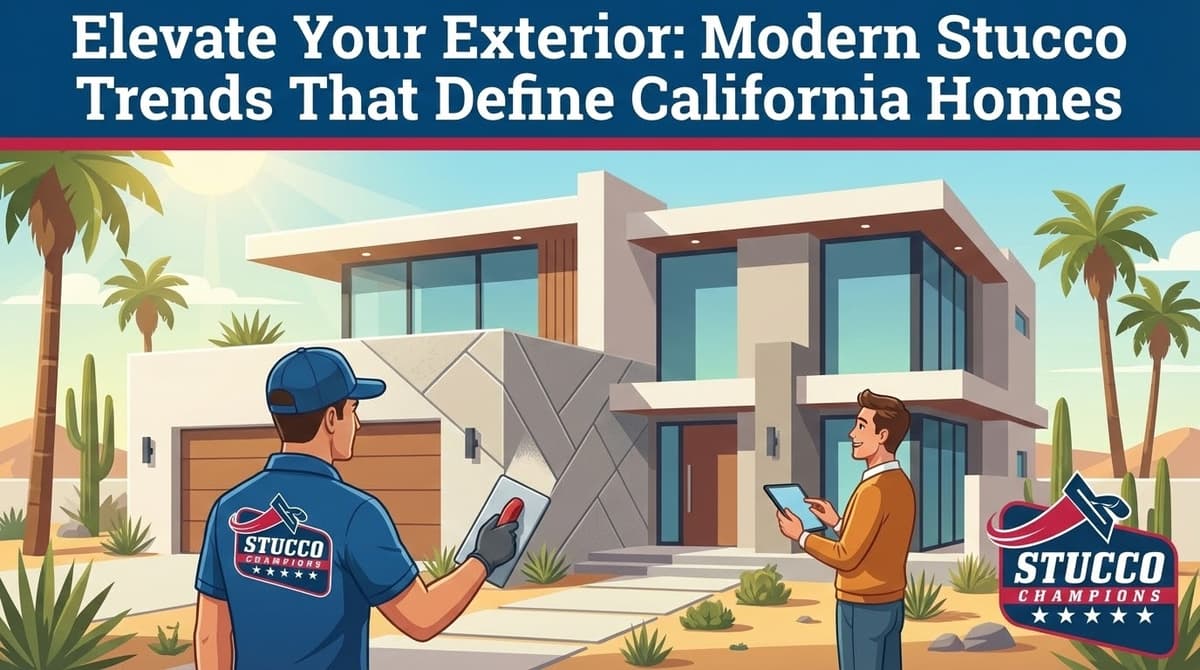
Gray has replaced beige as the dominant neutral in Southern California real estate. From the sleek "Modern Farmhouse" in Encinitas to the "Industrial Chic" lofts of Los Angeles, gray stucco defines the contemporary aesthetic.
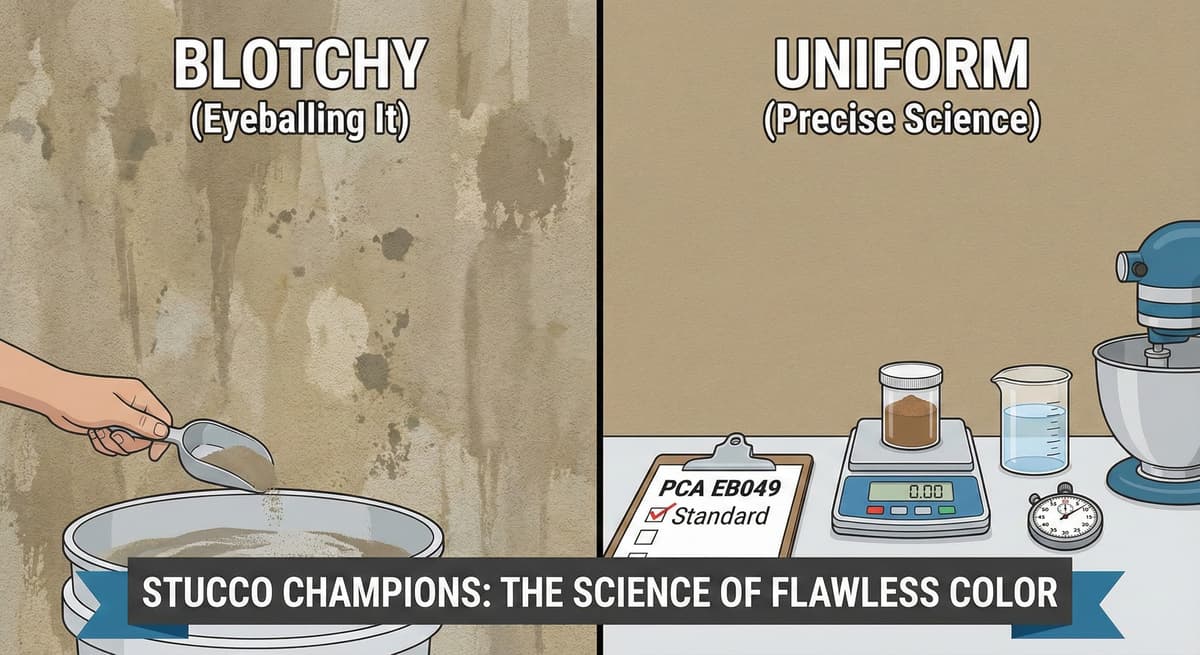
However, gray is chemically complex. It is not just "black and white mixed together." Depending on the pigments used (Carbon Black vs. Iron Oxide), gray stucco can turn blue, lavender, or brown as it cures. This guide explains the material science required to get the perfect gray exterior.
1. The "Blue Shift" Problem
The most common complaint with gray stucco is: "Why does my house look blue?"
The Physics: This is an optical illusion caused by "Cool Greys" placed under the bright blue California sky. If you choose a gray with a blue undertone (using carbon black pigment), the sky reflects off it, intensifying the blue hue.
The Solution: "Greige"
To achieve a "True Gray" in our bright sunlight, we often recommend "Warm Greys" or "Greige" (Grey + Beige). These earth-tone pigments counteract the blue reflection of the sky, resulting in a wall that actually looks gray to the human eye.
Free Assessment
Noticing Stucco Damage?
Get a free on-site assessment from a licensed contractor. $0 deposit, no obligation.
GET FREE ASSESSMENT2. Light Gray vs. Charcoal: Material Selection
The intensity of the gray dictates the material we must use.
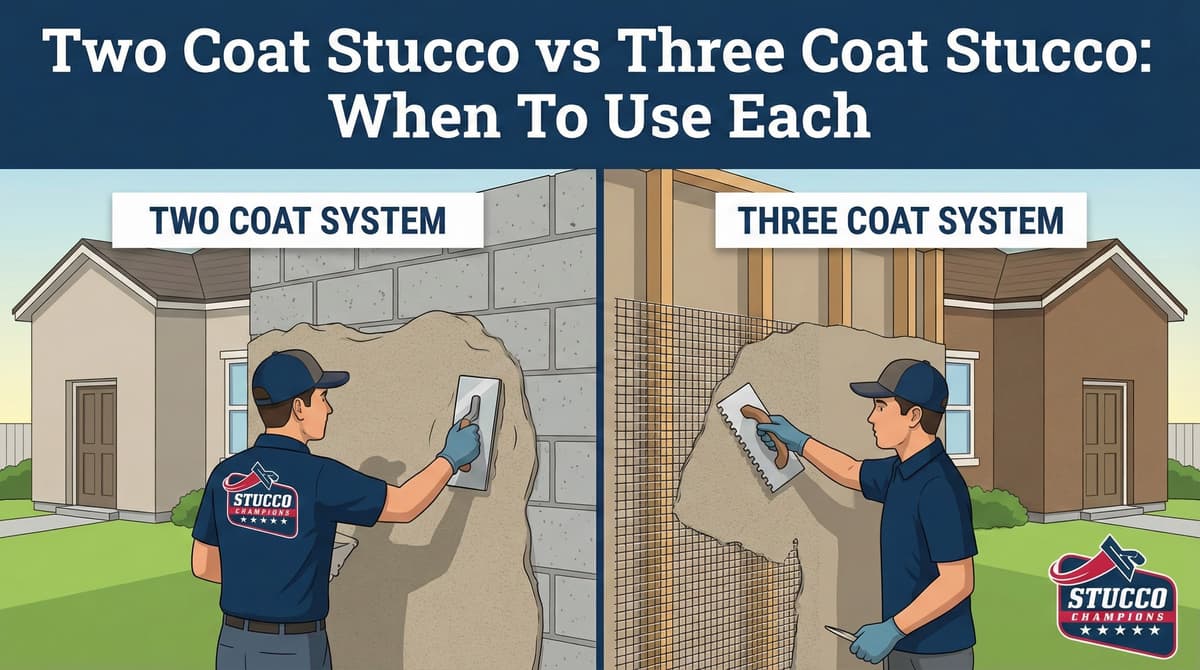
Light to Medium Gray (Traditional Cement)
Material: Standard LaHabra or Omega cement finish.
Aesthetic: Cement inherently mottles (dries with light and dark clouds). In gray, this looks like natural poured concrete. It is beautiful, organic, and ideal for modern architecture that wants a "raw" look.
Dark Charcoal / Black (Acrylic Finish)
Material: Acrylic Finish Only.
Why? You cannot achieve a pitch-black or charcoal color with standard cement. The white lime in the mix will always wash it out to a dark grey. Furthermore, dark cement is prone to "Efflorescence" (white salt stains) which ruins the look.
The Fix: Acrylic finish encapsulates the dark pigment, preventing salts from leaching out and ensuring a deep, uniform charcoal color.
3. The Thermal Danger of Dark Gray
While dark gray is trendy, it is physically stressful for the building.
⚠️ Heat Absorption
A Charcoal Gray wall absorbs 40-50% more heat than a White wall. In inland areas like Riverside or Santa Clarita, this can raise the surface temperature to 150°F+. This rapid expansion causes thermal cracking. If you choose dark gray, we recommend Fiber-Reinforced Base Coats and Acrylic Finishes to handle the movement.
4. Design Pairings: Stone and Wood
Gray is a cool color; it needs warmth to avoid looking like a prison.
- Wood Accents: Light Oak or Cedar siding creates a stunning contrast against dark gray stucco (The "Modern Farmhouse" palette).
- Stone Veneer: Avoid "Brown" or "Rust" stones, as they often clash with cool grays. Stick to Silver Travertine, White Limestone, or Charcoal Ledgestone.
5. Roof Coordination
Gray stucco is versatile, but it must agree with the roof:
- Black/Charcoal Roof: Works with any gray shade.
- Red Clay Roof: Tricky. Cool grays clash with warm red tile. You must use a "Warm Taupe-Gray" to bridge the gap.
- Brown Concrete Tile: Requires a "Greige" to harmonize.
6. Maintenance: The "Wet Effect"
Homeowners are often shocked when their gray house gets wet.
The Reality: Gray stucco absorbs water. When wet (from rain or sprinklers), it turns almost black. As it dries, it returns to gray. This is normal behavior for a breathable wall system. If you want the wall to repel water and stay the same color when wet, you must use an Acrylic finish or apply a Clear Sealer.
Related Resources
Last week, we shared Blemish to Brilliance: Unveiling the Magic of Stucco Patching. If you are patching a gray wall, color matching is difficult due to oxidation—read this guide first.